


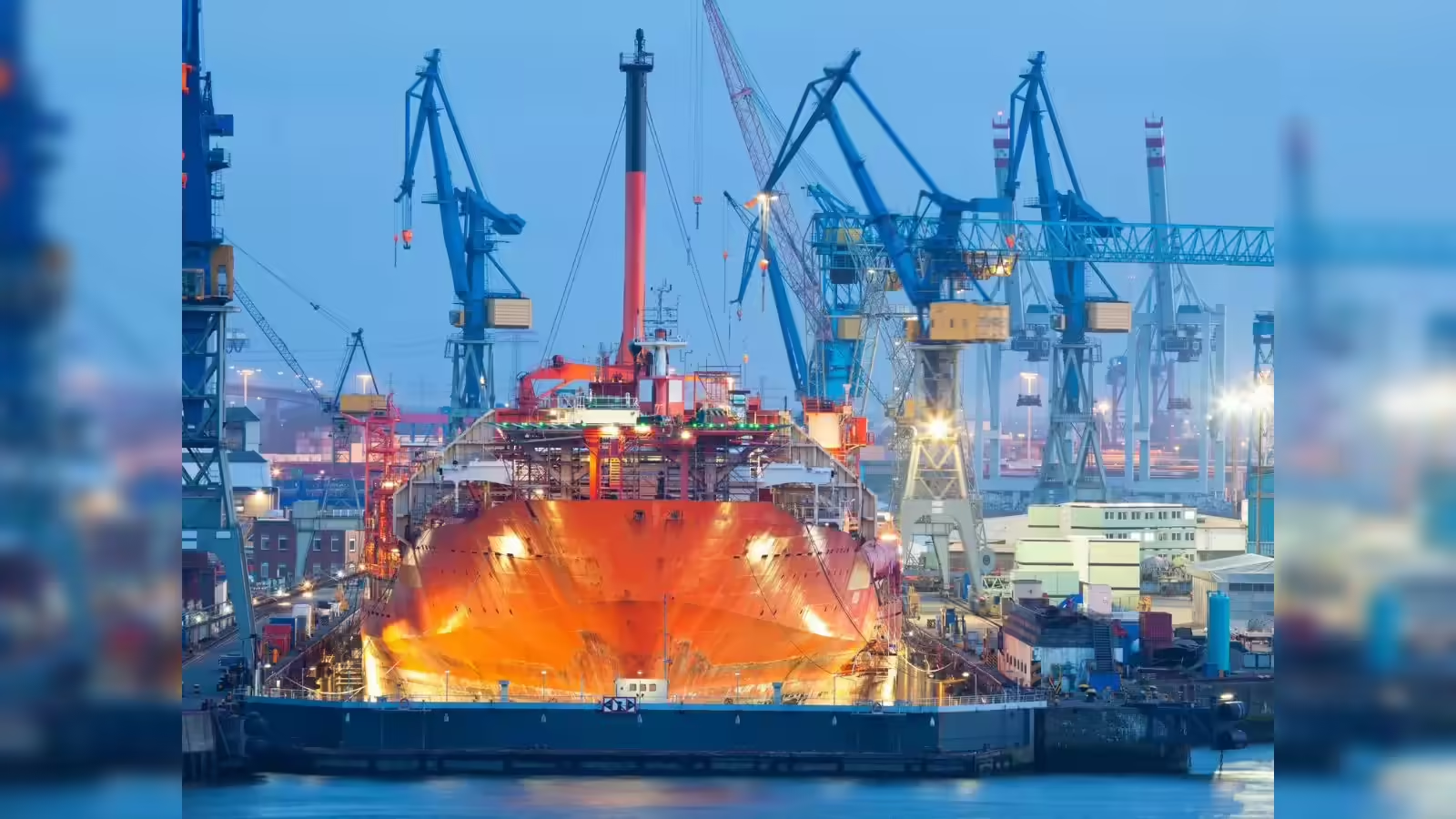
The restructuring of Vietnam’s shipbuilding sector under Politburo Decision 220 represents both a strategic opportunity and a time-critical turning point. Given Vietnam’s geographic position, its maritime development ambitions, and its deepening integration into global supply chains, the sector holds substantial long-term potential. However, this potential can only be realized through decisive, coordinated, and timely reform.
A successful modernization strategy should be built on five key pillars:
- Financial and legal clean-up as the foundation for renewal
The credibility of the restructuring process depends on a transparent and swift resolution of legacy issues. This includes the settlement of non-performing projects, clarification of creditor claims, and the full and legally final completion of pending bankruptcy procedures.
Timing is critical. Bankruptcy proceedings must be efficiently concluded and formally closed in order to create legal certainty. Only when ownership structures, liabilities, and asset titles are clearly resolved can new capital—particularly foreign investment—enter the sector with confidence. Delays risk further asset deterioration, lost investment windows, and prolonged reputational damage. A clean legal and financial reset is therefore the indispensable prerequisite for sustainable modernization.
- Strategic repositioning toward higher-value market segments
Vietnam should avoid competing primarily in low-margin, commoditized shipbuilding. Instead, the sector could reposition itself toward:
- Specialized vessels (e.g., offshore wind installation vessels, LNG support ships, coastal logistics vessels),
- Green and low-emission ships,
- Repair, retrofit, and vessel conversion services,
- Digitized and modular shipbuilding processes.
These segments align with global decarbonization trends and offer stronger value creation potential.
- Technology transfer and strategic foreign partnerships
Once bankruptcy procedures are finalized and asset structures clarified, Vietnam should actively attract strategic investors with technological expertise and access to international order books.
Joint ventures or minority strategic stakes by strong foreign partners can:
- Introduce advanced automation and production technologies,
- Implement international ESG standards,
- Integrate Vietnamese shipyards into global supply chains.
However, substantial foreign investment will only materialize if the restructuring is legally complete, transparent, and commercially structured.
- Strengthened corporate governance and professional management
Long-term competitiveness requires modern management systems, international accounting standards, and transparent procurement practices. Professional supervisory structures, clear accountability, and performance-based management are essential to restore trust among banks, customers, and investors.
- Human capital development and industrial ecosystem strengthening
Vietnam already possesses a solid industrial workforce. Nevertheless, targeted upskilling is necessary in areas such as digital ship design, automated welding, advanced materials, and alternative propulsion systems. At the same time, strengthening the domestic supplier base will enhance competitiveness and reduce external dependencies.
In conclusion, Decision 220 opens an important policy window for a genuine sector reset. Yet restructuring efforts must not stall in prolonged procedures. The timely and definitive completion of bankruptcy proceedings is the key to unlocking investor confidence and enabling foreign capital to bring new momentum to the industry.
If executed decisively and without delay, Vietnam’s shipbuilding sector can transition from a restructuring case into a modern, competitive, and forward-looking maritime industry aligned with global sustainability and trade dynamics.
***
Please do not hesitate to contact Dr. Oliver Massmann under [email protected] if you have any questions or want to know more details on the above. Dr. Oliver Massmann is the General Director of Duane Morris Vietnam LLC.

