


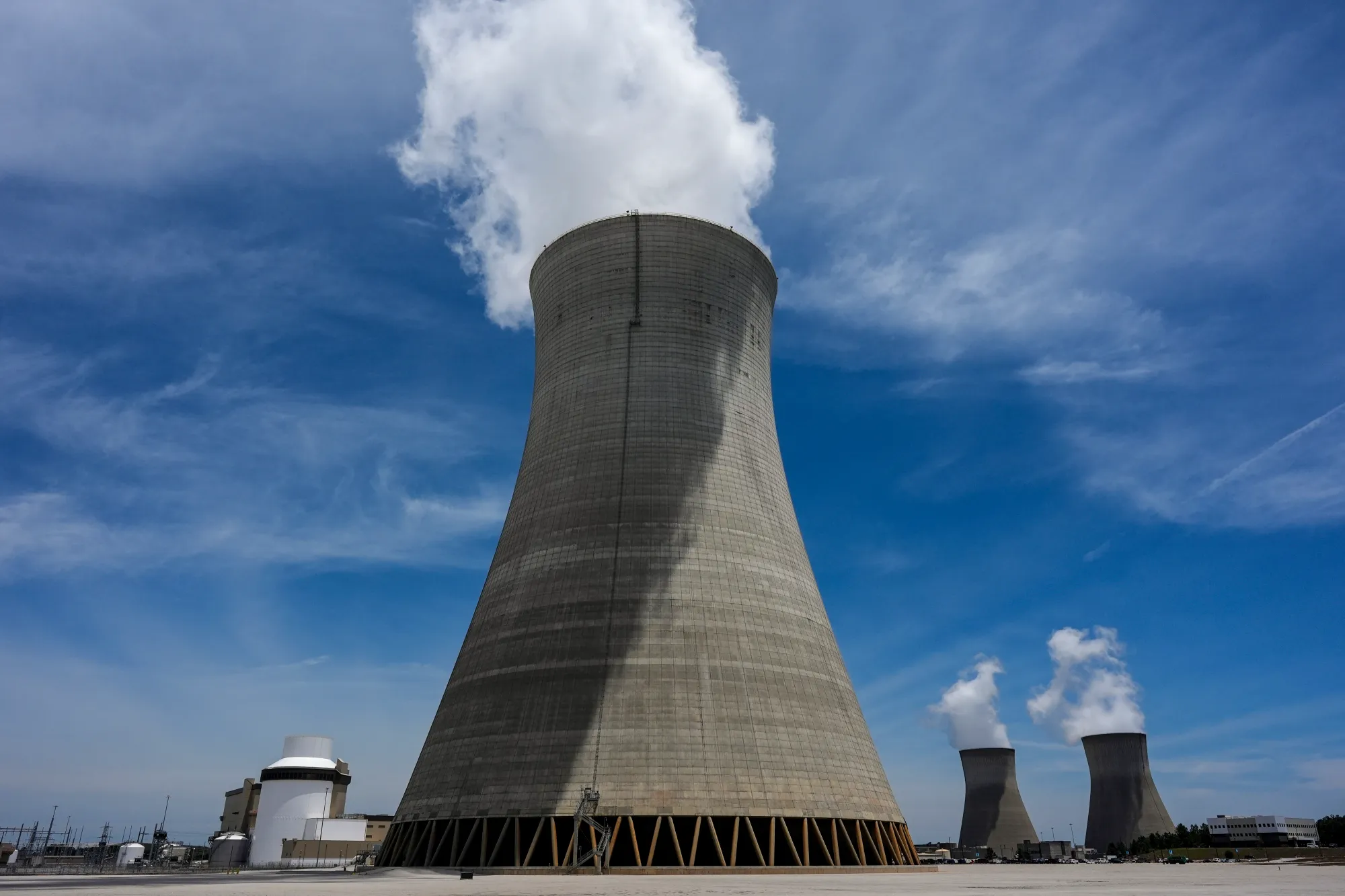
Vietnam’s decision to revive its nuclear power ambitions marks one of the most significant strategic infrastructure developments in Southeast Asia in decades. Yet many international observers continue to misunderstand the true nature of what Hanoi is now attempting to achieve.
Ninh Thuan 2 is not simply a power plant project.
It is the beginning of Vietnam’s attempt to create an entire national nuclear ecosystem almost from scratch.
This distinction is critical for investors, governments, EPC contractors, export credit agencies, infrastructure funds, insurers, technology providers, and legal advisors seeking to understand the magnitude of the opportunity—and the complexity of the challenge.
The project is not merely about constructing reactors. Vietnam must simultaneously develop:
- nuclear governance frameworks,
- regulatory capacity,
- safety oversight mechanisms,
- grid modernization capability,
- emergency response systems,
- workforce training pipelines,
- localization ecosystems,
- and long-term operational expertise.
Few countries in modern history have undertaken such an ambitious institutional transformation in parallel with industrial expansion.
And yet Vietnam increasingly appears determined to do exactly that.
Why Vietnam Is Returning to Nuclear Power
Vietnam’s return to nuclear energy is ultimately driven by one overriding issue: energy security.
The country’s economic trajectory continues to place extraordinary pressure on the national power system. Rapid industrialization, semiconductor manufacturing, AI infrastructure, data centers, electric mobility, and export-oriented heavy industry are all accelerating electricity demand at a pace difficult to satisfy through traditional energy sources alone.
Vietnam’s historical power model is becoming increasingly strained:
- domestic gas resources face long-term constraints,
- hydropower expansion opportunities are narrowing,
- coal financing is under growing international pressure,
- and renewable energy intermittency continues to challenge grid stability.
At the same time, Vietnam seeks to position itself as:
- a global advanced manufacturing hub,
- a strategic semiconductor destination,
- and a leading digital economy within ASEAN.
Such ambitions require reliable, large-scale baseload power generation.
In this context, nuclear energy is increasingly viewed in Hanoi not as an ideological project, but as a strategic industrial necessity.
Why Ninh Thuan 2 Matters Far Beyond Electricity Generation
Foreign investors should resist the temptation to analyze Ninh Thuan 2 as a conventional infrastructure project.
This is simultaneously:
- an energy project,
- a sovereign capability project,
- a geopolitical balancing exercise,
- a regulatory modernization programme,
- and an industrial policy initiative.
Vietnam must effectively build a national nuclear framework almost from the ground up.
This includes:
- nuclear licensing institutions,
- independent safety oversight,
- technical inspection capability,
- cybersecurity systems,
- fuel-cycle governance,
- radiation management infrastructure,
- and highly specialized engineering talent.
The challenge is therefore not only technological. It is institutional.
This reality explains why timelines may ultimately prove longer than optimistic political announcements initially suggest.
South Korea’s Increasingly Strong Position
Although no formal final award has yet been announced publicly, South Korea increasingly appears to be among the strongest—and perhaps leading—candidates for Ninh Thuan 2.
Several structural realities support this assessment.
First, Vietnam’s relationship with South Korea has become extraordinarily deep. Korea is now one of Vietnam’s largest investors, employers, and industrial partners. Samsung alone fundamentally reshaped significant portions of Vietnam’s manufacturing economy. Korean industrial credibility in Vietnam is exceptionally strong.
Second, South Korea offers something highly valuable in today’s geopolitical environment:
advanced technology without significant geopolitical friction.
For Hanoi, this matters enormously.
Vietnam traditionally seeks strategic balance and generally avoids overdependence on any single major power. Korea therefore represents a politically comfortable partner—technologically sophisticated, commercially disciplined, and broadly acceptable to both Western and Asian stakeholders.
Third, financing capability may ultimately prove decisive.
Nuclear projects are among the most capital-intensive infrastructure investments in the world. Vietnam must expand electricity generation while simultaneously maintaining fiscal discipline and sovereign flexibility.
If Korean stakeholders can provide:
- competitive export financing,
- long-term repayment structures,
- sovereign-backed support,
- and implementation certainty,
then Korea’s attractiveness increases substantially.
Finally, Korea’s international nuclear export credibility has strengthened materially in recent years, particularly through successful overseas project execution and the global reputation of the APR1400 platform.
Vietnam is observing these developments carefully.
The Reality of Nuclear Timelines
Public discussion often focuses on headline commissioning dates. However, investors should remain realistic.
Even under highly favorable circumstances, Vietnam’s nuclear timeline will likely extend over more than a decade.
The country is not merely constructing reactors. It is building:
- regulatory capability,
- operational expertise,
- institutional confidence,
- and long-term governance systems.
This takes time.
Optimistic scenarios may target initial commercial operation around 2034–2035.
However, a more conservative and realistic assessment likely places stable commercial operation closer to:
2036–2040.
This is not unusual for first-generation nuclear programmes.
Globally, nuclear projects frequently encounter:
- financing adjustments,
- infrastructure sequencing challenges,
- licensing delays,
- localization issues,
- workforce bottlenecks,
- and evolving safety requirements.
Vietnam will almost certainly proceed cautiously once implementation begins in earnest. The political consequences of a rushed or poorly managed nuclear programme would be enormous.
In reality, caution may become one of Vietnam’s greatest strengths.
The Three Critical Challenges Investors Must Understand
- Regulatory and Institutional Development
The greatest challenge may not be engineering—but governance.
Vietnam must develop:
- internationally credible safety oversight,
- licensing expertise,
- emergency preparedness frameworks,
- and long-term operational supervision capability.
This institutional ecosystem cannot be imported overnight.
- Grid Infrastructure and Transmission
Large-scale nuclear generation requires equally sophisticated transmission infrastructure.
Vietnam must simultaneously:
- modernize the national grid,
- strengthen dispatch systems,
- and improve long-distance transmission capability.
Without substantial transmission investment, generation capacity alone cannot solve Vietnam’s energy challenge.
- Human Capital and Localization
Vietnam must train:
- engineers,
- regulators,
- operators,
- safety specialists,
- cybersecurity experts,
- and nuclear technicians.
This may ultimately become one of the most important long-term dimensions of the programme.
The project therefore creates not only energy infrastructure—but industrial capability.
The Broader Investment Opportunity
Sophisticated investors should recognize that the opportunity surrounding Ninh Thuan 2 extends far beyond reactor construction itself.
The broader ecosystem may generate substantial opportunities in:
- transmission infrastructure,
- ports and logistics,
- engineering services,
- environmental consulting,
- project finance,
- insurance,
- digital systems,
- cybersecurity,
- localization,
- workforce development,
- industrial manufacturing,
- and regulatory advisory services.
In many respects:
the surrounding nuclear ecosystem may become economically as important as the reactors themselves.
A Realistic Action Plan for Investors
For investors considering participation in Vietnam’s nuclear future, several strategic priorities are becoming increasingly important.
- Build Long-Term Institutional Relationships
Vietnam’s nuclear programme will be shaped through long-term governmental and institutional coordination. Short-term transactional strategies are unlikely to succeed.
Investors should focus on:
- sustained engagement,
- technical cooperation,
- and credibility-building.
- Prioritize Localization Early
Vietnam increasingly expects strategic projects to contribute to domestic capability building.
Localization plans should include:
- workforce training,
- technology transfer,
- local supplier integration,
- and educational partnerships.
- Focus on Regulatory Understanding
Nuclear projects require interaction with multiple layers of government and regulatory oversight.
Early legal and regulatory mapping will be essential, particularly concerning:
- licensing,
- land use,
- environmental approvals,
- transmission integration,
- and safety compliance.
- Prepare for Long Timelines
This is not a short-cycle investment environment.
Investors should structure participation with:
- long-term capital discipline,
- phased implementation strategies,
- and realistic assumptions regarding project sequencing.
Conclusion
Vietnam’s revival of nuclear power is not simply the return of an energy project. It is the beginning of a national industrial transformation.
Ninh Thuan 2 represents Vietnam’s attempt to create:
- a sovereign nuclear capability,
- a modernized energy architecture,
- and a long-term industrial ecosystem almost from scratch.
The process will likely be:
- slower than political headlines suggest,
- institutionally demanding,
- and highly complex.
But the strategic direction now appears increasingly clear.
For investors with patience, sophistication, and long-term vision, Vietnam’s nuclear programme may ultimately become one of the defining infrastructure and industrial opportunities in Asia over the coming decades.
And for Vietnam itself, Ninh Thuan 2 may prove to be far more than a power plant.
It may become the foundation of an entirely new era of national industrial capability.
***
Duane Morris Vietnam stands ready to serve as Vietnamese legal counsel on this landmark project. For enquiries, please contact Dr. Oliver Massmann at [email protected].

