


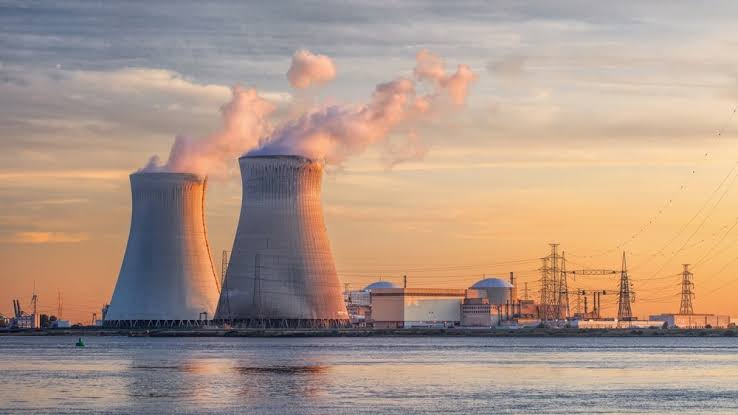

A commercial opportunity that requires a precise legal route
Vietnam’s Atomic Energy Law No. 94/2025/QH15 establishes a framework for participation in the country’s nuclear and radiation sectors. For foreign consultants, technology providers and investors, the commercial task is to match a specific role with the permissions, professional capabilities and financial commitments required to perform it lawfully. Incorporation, a contract award or a foreign technical qualification does not by itself satisfy the nuclear regulatory requirements.
The Law took effect on 1 January 2026. It expressly covers foreign organisations and individuals carrying out atomic energy activities in Vietnam. Its reach extends beyond electricity generation to research, training, industrial and medical radiation applications, transport, materials management and certain support services. [Articles 1, 2, 4(13), 72]
The first investment decision is the choice of role
A commercial adviser, a regulated radiation service provider, a reactor designer, a construction contractor and a plant operator face different obligations. The project should therefore begin with a written activity classification and approval map. That exercise determines who must apply, what evidence is needed, which activities must wait and what costs belong in the business case.
This guide explains the principal statutory duties and translates them into a market entry checklist and a compliance matrix. Recommendations on contracts and internal controls are identified as practical measures; they are not presented as additional statutory requirements.
Use the current legal package
Read the Law with its amendments, applicable implementing instruments and project-specific decisions. Consolidated text No. 64/VBHN-VPQH incorporates changes effective in March and July 2026. Principal implementing instruments include Decrees 316/2025, 331/2025 and 332/2025; administrative sanctions are addressed in Decree 71/2026. A transaction-specific review must also identify relevant circulars and any later amendments. [Sources 1–7]
- Market access and the consultant opportunity
Foreign participation is recognised but eligibility must be established
The Law encourages international cooperation, training, research, technology transfer and investment supporting nuclear development. Article 13 recognises several ways to mobilise resources, including public-private partnerships, loans, joint ventures, leasing and sponsorship. These provisions are commercially relevant, but they do not establish an unrestricted foreign ownership right, automatic investor selection or an entitlement to operate a nuclear power plant. [Articles 5, 11–13]
A prospective participant should separately establish its permitted business activities, investment and corporate approvals, contractual delivery structure and eligibility under the applicable procurement arrangements. Foreign contractor, construction, employment, immigration, tax, land, environmental and electricity requirements must be assessed where relevant. The Atomic Energy Law itself repeatedly preserves the application of other legislation. [Articles 41–48]
Classify the deliverable rather than relying on the job title
Radiation work under Article 14 generally requires a licence under Article 56(1), unless a prescribed exemption applies. Listed services supporting atomic energy under Article 15 require service registration under Article 56(2), with practising certificates addressed separately in Article 57. The implementing rules determine the detailed eligibility, personnel, equipment, application and validity requirements. [Articles 14, 15, 56–58]
The Article 15 list includes radiation safety training, installation and maintenance of radiation or nuclear equipment, personal dosimetry, radioactivity assessment, equipment inspection, calibration, decontamination, radiation monitoring and testing. General commercial or project management advice is not expressly listed in the supplied statutory list. This is a classification issue, not a blanket exemption: additional prescribed services and the actual technical scope must be checked before work starts.
Regulatory appraisal support is an express opportunity
Article 50 allows competent state appraisal authorities to hire technical support consultants for some or all work supporting appraisal of nuclear plant sites, technology and safety or security matters. These costs are included in total project investment. Article 52(3) extends the appraisal framework to research reactors. This provides a statutory basis for consulting assignments; it does not award an assignment or confirm any particular foreign firm’s eligibility.
Practical recommendation: distinguish an owner’s engineer or developer adviser from an adviser supporting a regulatory appraisal. Review procurement eligibility, competing mandates, independence and confidential information before accepting either role. Build the proposal around the specific approval dossier, technical evidence and deliverables required at the relevant stage.
Do not assume overseas credentials transfer automatically
Map each proposed expert’s duties against Vietnamese certification and construction capacity requirements. Obtain applicable registrations and certificates before performing regulated services; confirm any recognition route for foreign credentials rather than treating a home-country licence as sufficient. [Articles 44(1), 56, 57]
2 Nuclear projects require separate approval stages
For a nuclear power plant, investment approval, site approval, construction permission, commissioning permission and operation permission serve different purposes. The project schedule and contracts should record the dependency between them. The following is a statutory approval map, not a promise that all other approvals have been exhausted.
| Stage | Required decision or evidence | Statutory basis |
| Investment pathway | Determine investment policy and investment decision procedures; prepare the appropriate pre-feasibility and feasibility materials. | 42, 45 |
| Site | Detailed site assessment and site approval by the Prime Minister; approval may precede or coincide with the investment decision. | 43 |
| Design and environment | Qualified designers, quality controls, nuclear safety appraisal, environmental assessment including radiation impacts. | 44, 45 |
| Construction | Nuclear construction permit before construction of items relevant to radiation safety, nuclear safety or nuclear security. | 46 |
| Testing without fuel | Appraisal and approval of the commissioning programme before non-fuel testing. | 47(2) |
| Fuel loading | Commissioning licence before loading nuclear fuel; satisfy the stage-specific safety, personnel, emergency, security and environmental conditions. | 47(3)–(4) |
| Operation | Nuclear operating licence, followed by the electricity licence application; operating conditions and financial assurance must be met. | 48, 70 |
| Decommissioning | Approved and updated plan, termination licence, adequate funding and formal recognition of completion. | 49 |
Keep the safety case continuous
The investor and operator must maintain safety analysis reports that remain consistent and current across site, design, construction, commissioning and operation. These records must be retained until full decommissioning. A dossier prepared for one stage does not remove the evidence requirements at the next stage. [Article 33(3)]
Safety-relevant design changes during construction require reporting and approval before the affected work continues. Commissioning programme changes also require approval. Commercial variation procedures should accommodate both controls. [Articles 46(4), 47(5)]
Research reactors have a distinct route
Articles 52–54 apply many nuclear plant requirements to research reactors, with express differences. Site approval belongs to the central atomic energy authority rather than the Prime Minister under Article 53(3). Research reactor projects should use their own approval schedule, including the special provisions for prolonged shutdown. Decree 316/2025 contains project implementation detail. [Source 3]
3 Safety and supply chain controls start before mobilisation
Management retains the statutory responsibility
The Law assigns primary safety and security responsibility to organisations undertaking radiation work and constructing relevant facilities. Heads of nuclear establishments bear the highest responsibility throughout the facility lifecycle. Hiring an experienced consultant is valuable, but it does not transfer those statutory responsibilities away from the responsible organisation or management. [Articles 6, 25, 34]
For licensed radiation work, management must designate a radiation safety officer and define that person’s authority in writing. Relevant duties include training, health examinations, individual dose monitoring, internal procedures, workplace monitoring, waste control and emergency readiness. Radiation workers must follow safety instructions and report abnormalities. [Articles 20, 25]
Technical standards need an agreed legal basis
Article 33(2)(dd) requires compliance with applicable Vietnamese technical regulations. Where no relevant national technical regulation exists, it allows specified Vietnamese, foreign or international standards subject to compatibility with Vietnamese conditions and IAEA safety and security standards and guidance. A vendor’s preferred international code should therefore be mapped to the applicable Vietnamese requirements and reflected in the regulatory dossiers.
The Law requires advanced and proven technology for nuclear power plant design and defence in depth. Investors must supervise contractors, subcontractors and suppliers and inspect the quality of fabrication of safety-important structures, systems and components. [Articles 44(2), 46(3)]
Practical recommendation: include a documented hierarchy of technical requirements, supplier qualification, traceability, audit access, non-conformance reporting and approval of substitutions in procurement documents. Article 5 supports localisation as policy; it does not itself set a universal numerical local-content quota.
Imports and transport need their own controls
Import and export of regulated radioactive materials and nuclear equipment require the relevant permissions. Transport requires safety, security and incident-response plans, with the transport emergency plan subject to appraisal. Certain transit movements require the Prime Minister’s permission; medium- and low-hazard sources have a separately prescribed treatment. [Articles 28–30]
Do not treat the declaration period after possession as permission to import, possess or use a controlled item without the required approvals. Notification, declaration, licensing and customs compliance are distinct obligations. Importing radioactive waste is prohibited. [Articles 9(5), 30, 55, 56]
The waste route must be credible from the outset
Waste generators must fund the required management activities. Waste facilities require radiation work licences and financial arrangements for operation and termination. Export of waste or spent fuel requires permissions and the receiving country’s consent, capability and legal framework. A proposed vendor take-back clause does not by itself establish a lawful export route. [Articles 36–39]
4 Liability and financial assurance affect bankability
Separate radiation damage from nuclear damage
Radiation damage under Article 68 is governed by civil law as to responsibility, compensation and limitation periods. Nuclear damage falls under the specific statutory regime in Articles 69 and 70. The distinction should be assessed when scoping professional indemnity, construction, transport and nuclear liability cover.
Responsibility changes at the commissioning boundary
Article 69(2)(a) places sole responsibility for qualifying nuclear damage on the investor during commissioning and on the operating organisation during operation, where the necessary causal link to an incident at its facility is established. The provision extends responsibility regardless of where the resulting damage occurs. It should not be read as extending the statutory regime to every incident occurring anywhere in the world; Article 69(1) defines its incident-related territorial scope.
Article 69(4) imposes compensation liability on operating organisations even without fault, subject to its stated exceptions, including war or terrorism and specified victim conduct. The last authorised operating organisation can remain responsible for damage caused by stolen, lost, discarded or abandoned nuclear material. [Article 69(2)(b)]
Transport contracts must allocate the statutory handover
The default rule places responsibility on the consigning organisation until the receiving organisation receives the material. Article 69(3) permits a written agreement allocating responsibility at another transport stage or to a carrier at its request. A carrier assuming responsibility assumes the relevant operator responsibilities. Align the liability agreement, physical handover evidence, transport permits and insurance period; a commercial delivery term alone should not be assumed to resolve all four.
Financial assurance must reflect the implementing rules
The Law delegates compensation amounts to implementing rules. Decree 332/2025, Article 105, provides minimum insurance or other assurance of SDR 150 million per nuclear power plant incident and SDR 5 million for other nuclear facilities and nuclear material transport incidents. It also addresses total incident compensation and state support by reference to SDR 300 million. These are distinct assurance and compensation provisions; they should not be reduced to a single assumed contractual liability cap. [Articles 69, 70; Source 5]
Article 70 requires proof of assurance for the operating licence application. Decree 332/2025, Article 105(1)(c), also requires supporting insurance or financial assurance documents when applying for commissioning permission. Arrange coverage before the relevant exposure starts. State support is subject to statutory limits; it is not an unlimited sovereign project guarantee. [Source 5]
Contractual exposure remains a separate diligence item
Consultants and suppliers should not assume that statutory allocation of nuclear damage eliminates professional negligence, contractual, administrative or other exposure. Review indemnities, recourse, nuclear exclusions, defence costs and enforceability of liability caps. Nuclear damage claims have statutory periods of 30 years for death or injury to health and 10 years for other damage, running from the incident. [Article 69(7)]
5 Compliance continues throughout the project lifecycle
Digital records and information security
Article 7 establishes digital filing, licensing and information management duties and requires timely, complete and accurate data updates. State-secret material is excluded from the ordinary platform rule; access and use must respect state secrets, personal data and cybersecurity requirements. The platform is not a reason to make all technical or security information publicly accessible.
Practical recommendation: classify project records before collection or sharing, control user access and appoint a data owner. Review offshore engineering access, remote support and proposed cross-border transfers under the applicable data and secrecy rules. The Atomic Energy Law alone does not settle every cross-border data question.
Safeguards can apply even without nuclear material on site
The provisions translated as “nuclear inspection” in Articles 62–64 concern nuclear safeguards and non-proliferation verification, including IAEA activity. They are distinct from the domestic regulatory inspection powers in Articles 59–61. Fuel-cycle research and development, including planned activities not involving nuclear materials, can fall within the safeguards scope. [Article 62(3)(c)]
An affected organisation must support verification and the lawful work of international inspectors and national authorities. The safeguards position should be assessed before commencing fuel-cycle research, transferring controlled equipment or organising access to sensitive facilities. [Articles 62, 63]
Reporting and emergency readiness must be operational
Radiation work organisations submit annual safety status reports and reports requested by authorities. Nuclear establishments also submit comprehensive reports every 10 years. Workplace and, where applicable, environmental radiation monitoring require retained records. Abnormal environmental results and loss of security trigger immediate reporting obligations. [Articles 17(3), 19, 20, 23, 34]
Facility response arrangements must address credible scenarios, command structure, mobilisation of resources and drills, and connect with provincial and national plans. Public information and community feedback duties coexist with restrictions on sensitive security information. Inspectors and supervisors can require remedies and suspend dangerous activity. [Articles 25, 35, 51, 59–61, 65–67]
Budget for exit before entry
Decommissioning planning begins at design and must be reviewed and updated. Nuclear plant owners and operators must fund the full decommissioning costs. Safety and security responsibilities end only after the approved plan is completed and termination is formally recognised; closure of the business or expiry of a contract does not achieve that release. [Article 49; radiation establishments: Article 21]
Existing permissions require a transition review
Article 73 preserves certain existing licences, registrations, exemptions, pending amendment or renewal procedures and special project mechanisms. It is not a general waiver for new activities or scope changes. Check the exact historical permission and the current rule governing each proposed change. Apply the current planning framework rather than the superseded wording of the original Article 10(2). [Articles 3, 58, 73; Source 2]
6 Market entry checklist
Use this checklist before committing to delivery dates or mobilising a team. These are practical diligence steps; the legal duties they test are identified in the compliance matrix. Record the evidence, decision owner and any unresolved condition for each item.
01 Define the precise activity. List every advisory, design, installation, inspection, training, monitoring, transport and operating deliverable.
02 Identify the legal role. Specify investor, owner, operator, licence holder, consultant, carrier, importer and waste generator; identify changes between project stages.
03 Confirm market access. Check the foreign participation route, business scope and any required corporate, investment or foreign contractor approvals.
04 Confirm the contracting route. Check the client’s authority, procurement rules, financing conditions and any project-specific mechanism; assess competing mandates.
05 Classify nuclear permissions. Match each activity to Article 14, Article 15 or another applicable category; document any exemption and its legal basis.
06 Verify personnel and capacity. Confirm organisational eligibility, professional certificates, construction capabilities and the lawful mobilisation of foreign experts.
07 Build the approval schedule. Separate investment, site, design, environmental, construction, commissioning, nuclear operation and electricity requirements.
08 Agree the technical basis. Map Vietnamese technical regulations, permitted standards, technology evidence and safety analysis responsibilities.
09 Secure the logistics route. Identify item classifications, exporter and importer, permits, transit route, emergency plans and receiving permissions.
10 Price the full lifecycle. Include compliance staffing, regulatory dossiers, security, insurance, waste, spent fuel and decommissioning costs.
11 Set the liability structure. Check current compensation rules, statutory responsibility, contractual recourse, insurance exclusions and transport handover.
12 Establish the compliance system. Assign safety and data owners, reporting calendars, document controls, supplier audits and emergency escalation.
13 Protect project information. Review state-secret classification, safeguards, cybersecurity, personal data and authorised offshore access.
14 Make delivery conditional. Tie regulated mobilisation and performance to the required effective approvals and verified qualifications.
15 Approve the entry decision. Record the evidence supporting eligibility, permissions, insurability, financing and a feasible waste and exit route.
7 Compliance matrix
Statutory duties apply to the identified role and activity, not automatically to every foreign shareholder or consultant. The evidence column recommends practical records. Confirm detailed forms, exemptions, validity periods and procedures under the applicable implementing instruments.
| Duty and basis | Responsible party and timing | Required action | Evidence |
| Activity authorisation Articles 9(3), 14, 56, 58 |
Radiation work performer Before work; scope changes |
Obtain the applicable licence before regulated work; document any exemption. | Licence and scope register |
| Support services Articles 15, 56, 57 |
Service provider and relevant practitioners Before regulated services; renewals |
Obtain applicable service registration and practising certificates. | Registration; certificates |
| Planned work notice Articles 55(1), (4) |
Person planning radiation work At planning stage; prescribed procedure |
Notify the radiation and nuclear safety authority of the planned activity. | Notice and submission receipt |
| Possession declaration Articles 55(2) |
Relevant material or equipment possessor Within 10 working days of possession |
Declare prescribed materials and equipment, taking applicable exemption thresholds into account. | Inventory; declaration receipt |
| Source transfer Articles 55(3) |
Person planning source transfer Within 30 days of forming the plan |
Declare the intention to transfer radioactive sources. | Dated plan; declaration |
| Safety assessment Articles 17 |
Relevant radiation work applicant Licence application or before construction, as applicable |
Prepare the applicable assessment or analysis report; obtain required pre-construction analysis approval. | Stage-specific report; approval |
| Management and personnel Articles 25 |
Licensed radiation work management Before work; ongoing |
Appoint safety officer in writing; provide training, health checks and individual dose monitoring. | Appointment; training and dose records |
| Nuclear site and design Articles 43, 44; 53 |
Nuclear project investor Before the relevant project stage |
Obtain site approval and required design appraisal; use qualified designers and quality controls. | Site decision; design appraisal |
8 Compliance matrix continued
Statutory duties apply to the identified role and activity, not automatically to every foreign shareholder or consultant. The evidence column recommends practical records. Confirm detailed forms, exemptions, validity periods and procedures under the applicable implementing instruments.
| Duty and basis | Responsible party and timing | Required action | Evidence |
| Nuclear construction Articles 46 |
Nuclear plant investor Before affected work or continuation |
Hold construction permit before safety or security relevant construction; control safety-relevant design changes. | Permit; approved changes |
| Commissioning Articles 47 |
Nuclear plant investor Separate pre-test and pre-fuel gates |
Obtain programme approval before non-fuel tests and commissioning licence before fuel loading. | Approved programme; licence |
| Operation Articles 48 |
Nuclear plant operator Before operation; continuous |
Obtain nuclear operating licence; then apply for electricity licence; comply with operating limits. | Licences; operating procedures |
| Financial assurance Articles 69, 70 |
Relevant investor or operator Exposure period; operating licence application |
Maintain insurance or other assurance for nuclear damage; submit proof for regulatory approval. | Approved assurance; cover evidence |
| Workplace monitoring Articles 20 |
Radiation work organisation Regularly and systematically |
Monitor radiation systematically; maintain and calibrate equipment; keep monitoring files. | Monitoring and calibration logs |
| Environmental monitoring Articles 23(2)–(3) |
Organisation with potential radioactive releases Periodic; immediate on abnormality |
Monitor and report results; immediately report abnormal results. | Monitoring reports; incident alerts |
| Periodic safety reporting Articles 17(3), 34(2)(d) |
Radiation work body; nuclear establishment head Annual; 10-year; on request |
Submit annual/requested safety reports; nuclear establishment comprehensive report every 10 years. | Reporting calendar; filed reports |
| Security and source loss Articles 19, 34, 51 |
Relevant source/material holder Continuous; immediate event reporting |
Maintain protection and inventory controls; immediately report loss or other specified security events. | Security plan; inventories; alerts |
9 Compliance matrix continued
Statutory duties apply to the identified role and activity, not automatically to every foreign shareholder or consultant. The evidence column recommends practical records. Confirm detailed forms, exemptions, validity periods and procedures under the applicable implementing instruments.
| Duty and basis | Responsible party and timing | Required action | Evidence |
| Imports and transport Articles 28–30 |
Importer/exporter; transporting party Before shipment, export/import or transit |
Obtain required permits, transit permissions and transport plans; secure appraisal of transport response plan. | Permits; plans; handover records |
| Radioactive waste Articles 9(5), 36–40 |
Waste generator; licensed waste organisation Before generation and throughout handling |
Fund lawful management; use licensed facilities; comply with transfer and export rules; no waste imports. | Waste plan; licences; transfer records |
| Safeguards Articles 62, 63 |
Entities within Article 62(3) Before and during applicable activities |
Provide required information and permit lawful verification, including relevant fuel-cycle research. | Safeguards records; access arrangements |
| Digital compliance Articles 7 |
Participants within Article 7 At filings; timely updates |
Provide accurate and timely platform data; respect secrecy, personal data and cybersecurity rules. | Submission log; access controls |
| Emergency preparedness Articles 25, 47, 65–67 |
Facility management; relevant responsible parties Before relevant activities; maintain readiness |
Prepare and implement applicable response plans, resources, scenarios and drills. | Plans; drill and training records |
| Community information Articles 35 |
Nuclear establishment and relevant authorities Regularly; as required |
Provide required safety information and mechanisms for receiving community feedback. | Communications and feedback log |
| Inspection and renewal Articles 58–61 |
Regulated organisation and licence holder Ongoing; before expiry or affected change |
Cooperate with inspections, remedy findings, keep conditions satisfied and seek required revisions or renewals. | Inspection close-outs; renewal tracker |
| Decommissioning Articles 49 |
Nuclear plant owner and operator From design through final release |
Maintain approved plan and funding; obtain termination licence and formal recognition of completed obligations. | Updated plan; funding; release decision |
10 Implementation priorities and legal sources
Turn the legal review into a deliverable plan
The most useful first output for a foreign participant is a concise activity and eligibility assessment supported by an approval schedule. It should identify the contracting entity, regulated activities, required organisational and personal permissions, evidence gaps and approval dependencies. For investors, add a financial model covering insurance, security, waste and decommissioning. For consultants, add a deliverable-by-deliverable responsibility schedule and a review of credentials and competing mandates.
The resulting decision should be specific: which work can begin now, which work requires permission first, which commitments depend on authority action, and which risks require revised pricing or contractual protection. This provides a sound basis for a compliant bid, an investable project structure and a realistic mobilisation plan.
Principal primary sources
[1] Law No. 94/2025/QH15 of 27 June 2025, effective 1 January 2026. The supplied English translation is used as a reference; Vietnamese statutory wording controls. Official source
[2] Consolidated text No. 64/VBHN-VPQH of 23 March 2026, incorporating Planning Law No. 112/2025/QH15 and Cybersecurity Law No. 116/2025/QH15 amendments. Official source
[3] Decree No. 316/2025/ND-CP of 10 December 2025, nuclear power plants and research reactors; effective 1 January 2026. Official source
[4] Decree No. 331/2025/ND-CP of 18 December 2025, development and application of atomic energy; effective 1 January 2026. Official source
[5] Decree No. 332/2025/ND-CP of 18 December 2025, safety, security, safeguards, licensing, response and compensation; effective 1 January 2026. Official source
[6] Decree No. 71/2026/ND-CP of 9 March 2026, administrative sanctions in atomic energy; effective 1 May 2026. Official source
[7] Ministry of Science and Technology notice of 13 July 2026 on 12 nuclear administrative procedures; identifies Circulars 60/2025/TT-BKHCN and 07/2026/TT-BKHCN. Official source
Scope of this guide
Article references are to the Atomic Energy Law. This is a statutory framework guide, not an exhaustive review of every implementing rule or project-specific approval. Current detailed conditions, compensation amounts, technical rules and filing procedures must be verified for the proposed activity. Contract controls and diligence steps are recommendations. Information is stated as of 3 November 2026.
***
For more information on the above, please do not hesitate to contact the author Dr. Oliver Massmann under [email protected]. Dr. Oliver Massmann is the General Director of Duane Morris Vietnam LLC.