


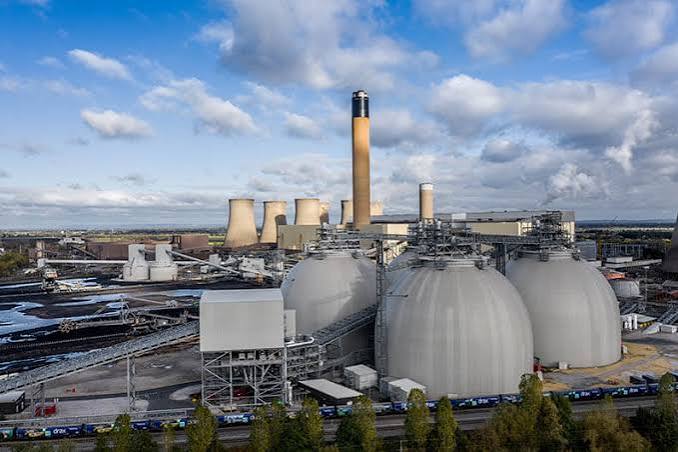
Vietnam’s biomass power sector is entering a fundamentally new phase.
For many years, foreign investors looked at biomass in Vietnam primarily through the lens of feed-in tariffs, investment licences and available agricultural residues.
That approach is no longer sufficient.
Vietnam is now moving towards a much more sophisticated electricity market in which project-specific pricing, negotiated Power Purchase Agreements, Direct Power Purchase Agreements, competitive electricity-market participation, grid access, feedstock security and project finance bankability increasingly determine whether a biomass project succeeds.
For foreign developers, infrastructure funds, utilities, strategic investors and lenders, this creates both opportunity and complexity.
The crucial question today is no longer simply:
“Can we develop a biomass power plant in Vietnam?”
The real questions are:
Can we negotiate a bankable PPA?
Can the tariff support project financing?
Can lenders obtain adequate protection against curtailment, change in law, termination, payment and foreign-exchange risks?
Is there enough secure feedstock for the full debt and project life?
Can the project access a corporate offtaker through Vietnam’s DPPA regime?
And, perhaps most importantly:
Does the investor understand exactly which Vietnamese institutions – and which responsible decision-makers within those institutions – actually control the key commercial and regulatory issues?
For serious investors, these questions should be addressed at the very beginning of project development, not after millions of dollars have already been committed.
- VIETNAM IS PLANNING FOR MUCH MORE BIOMASS POWER
Vietnam’s Revised Power Development Plan VIII, approved under Decision No. 768/QĐ-TTg dated 15 April 2025, gives biomass an important role in the future electricity mix.
Vietnam targets approximately:
1,523–2,699 MW of biomass power by 2030, and
4,829–6,960 MW by 2050.
The Government specifically encourages biomass and waste-to-energy projects that utilise agricultural, forestry and wood-processing residues and simultaneously contribute to environmental protection and the circular economy. (Chính Phủ)
That is particularly important for Vietnam.
The country possesses abundant biomass resources generated from:
- rice production;
- sugar cane;
- coffee;
- cassava;
- coconut;
- forestry;
- wood processing;
- livestock and agricultural activities; and
- industrial organic waste streams.
Biomass also has an important technical advantage over intermittent renewable energy.
Unlike solar and wind, a properly structured biomass plant can provide dispatchable renewable generation, comparatively high capacity factors and, in appropriate cases, combined heat and power.
This makes biomass particularly attractive around:
- industrial parks;
- sugar mills;
- rice-processing facilities;
- pulp and paper plants;
- wood-processing clusters;
- food-processing operations; and
- industrial consumers requiring both electricity and steam.
The strongest projects will increasingly be those where energy production, feedstock supply and industrial consumption are integrated into one bankable economic ecosystem.
- FOREIGN INVESTORS MUST FORGET THE OLD “WHAT IS THE FIT?” MINDSET
Historically, investors approaching Vietnam’s biomass sector frequently began with one question:
“What is the biomass feed-in tariff?”
That question is becoming less relevant.
Vietnam has moved towards a more project-specific electricity-pricing framework in which generation prices and PPA economics must increasingly be supported by underlying investment and operating assumptions.
For international investors, this means that the commercial strategy must move away from simply applying a published FIT and towards:
building a tariff case, preparing defensible financial assumptions, negotiating the PPA and ensuring the resulting revenue structure is financeable.
That is a major change.
It also means that electricity lawyers, financial advisers and technical consultants must work together much earlier in the development cycle.
- CIRCULAR 12/2025/TT-BCT: THE MOST IMPORTANT PPA DEVELOPMENT FOR FOREIGN INVESTORS
This may be the single most important legal development for foreign investors in Vietnamese power projects.
Circular No. 12/2025/TT-BCT of the Ministry of Industry and Trade expressly provides that the prescribed main contents of the PPA constitute the basis for negotiation and signing between the electricity seller and electricity buyer.
More importantly, Article 19 expressly states that the seller and buyer have the right to negotiate and agree additional contractual provisions, provided those provisions comply with Vietnamese law. (LuatVietnam)
This deserves emphasis.
The PPA is no longer properly viewed merely as a form contract to be accepted.
Circular 12 creates an express regulatory foundation for negotiation.
That is a major bankability opportunity.
The framework has subsequently been amended, including through Circular No. 54/2025/TT-BCT, and the current consolidated regime should therefore be reviewed carefully for each individual project. The consolidated provisions continue to contemplate negotiated amendments and supplementation of PPAs. (moit.gov.vn)
For an international lender, however, merely knowing that a PPA is “negotiable” is not enough.
The key question is:
What should actually be negotiated?
- WHAT MAKES A BIOMASS PPA BANKABLE?
A bankable PPA is not simply a contract containing a tariff.
International project-finance lenders examine the allocation of virtually every major project risk.
For biomass projects in Vietnam, investors should carefully assess whether the PPA adequately deals with the following.
Payment security
Who bears payment risk?
What happens in the event of delayed payment?
Are default interest and enforcement mechanisms adequate?
Can project revenues safely service foreign and domestic debt?
Curtailment and deemed generation
What happens if the plant is technically available and ready to generate, but power cannot be dispatched because of grid congestion, system instructions or curtailment?
A project-finance lender will want to know whether the project company carries that risk entirely.
Change in law
A biomass plant may operate for 20–30 years.
Electricity regulation, environmental standards, taxation, grid rules and technical requirements may all change during that period.
The PPA must therefore be examined for appropriate change-in-law mechanisms.
Termination compensation
This is one of the most important bankability provisions.
If the PPA is terminated before outstanding project debt has been repaid, what compensation is available?
International lenders may be unwilling to finance a project where termination payments do not adequately protect outstanding debt and invested capital.
Lender step-in rights
Project-finance lenders normally expect an opportunity to cure defaults or step into the project before the project’s principal contracts can be terminated.
This should be considered not only in the PPA but also in:
- land arrangements;
- feedstock agreements;
- EPC contracts;
- O&M agreements; and
- major project permits where legally possible.
Foreign-exchange risk
A project may receive revenue in Vietnamese Dong while substantial debt, equipment and EPC costs are denominated in USD, EUR, JPY, KRW or another foreign currency.
Investors must model that mismatch from Day One.
Force majeure
Definitions matter.
So do:
- notification requirements;
- relief periods;
- mitigation obligations;
- prolonged force majeure;
- termination rights; and
- compensation consequences.
Dispatch and grid risk
The PPA must be analysed together with:
- the grid connection agreement;
- system-operation rules;
- dispatch obligations;
- metering arrangements;
- electricity-market rules; and
- NSMO requirements.
Commissioning and COD
Commercial operation mechanics must align with:
- the EPC schedule;
- financing milestones;
- grid availability;
- testing procedures;
- performance guarantees; and
- long-stop dates.
Dispute resolution
Investors should understand precisely what dispute-resolution options Vietnamese law permits under the relevant transaction structure and whether those mechanisms will satisfy lenders and investment committees.
- CIRCULAR 12 CREATES AN OPPORTUNITY – BUT NOT EVERY CLAUSE WILL AUTOMATICALLY BE ACCEPTED
Foreign investors should be realistic.
Circular 12 does not mean that every clause requested by an international lender will automatically be accepted by the Vietnamese purchaser.
Nor does it mean that regulatory restrictions disappear.
What Circular 12 does provide is something extremely valuable:
an express legal basis for the parties to negotiate and supplement the PPA.
That changes the strategy.
Instead of simply identifying deficiencies in the standard wording, foreign investors should prepare a structured bankability negotiation package.
For each proposed amendment, the investor should be able to explain:
- why the clause is required;
- what project risk it addresses;
- why lenders require it;
- whether Vietnamese law permits it;
- whether comparable risk allocation exists elsewhere;
- what alternative drafting could achieve the same objective; and
- what the economic consequences are if the risk remains with the project company.
The best PPA negotiations are therefore not conducted as a list of foreign-law-style amendments.
They are conducted as a bankability dialogue.
- THE MOST UNDERESTIMATED FACTOR: KNOW WHO ACTUALLY CONTROLS THE PPA ISSUES
Foreign investors sometimes speak generally about “negotiating with the Vietnamese Government.”
That is too imprecise to develop a successful power project.
There is no single institution that decides everything.
Different issues fall within the responsibility of different bodies.
Depending on the project structure, the relevant institutional stakeholders may include:
Ministry of Industry and Trade
MOIT is central to electricity-sector policy and regulation.
Its electricity authorities play important roles regarding:
- electricity pricing methodologies;
- generation-price frameworks;
- market regulation;
- implementation of the Electricity Law;
- PPA regulation; and
- regulatory guidance.
Vietnam Electricity – EVN
EVN remains one of the most important institutions in Vietnam’s electricity sector and an essential commercial counterparty or stakeholder in many grid-connected projects.
EVN Electric Power Trading Company – EVNEPTC
For conventional power projects, EVNEPTC can be particularly important because it performs substantial PPA negotiation and electricity-trading functions within the EVN system.
Foreign investors should understand not merely EVN at corporate level, but which unit is actually responsible for negotiating the commercial issue in question.
National Power System and Market Operation Company – NSMO
NSMO plays a critical role in:
- system operation;
- dispatch;
- market operation;
- market settlement; and
- implementation of national-grid DPPA arrangements.
For projects participating in the competitive electricity market, NSMO’s role can become fundamental.
Provincial authorities
The relevant Provincial People’s Committee and provincial departments may be important for:
- project implementation;
- land;
- local planning;
- construction;
- environmental coordination;
- investment procedures; and
- local infrastructure.
Grid companies and Power Corporations
The relevant transmission or distribution entities may control issues that directly affect:
- connection;
- technical design;
- metering;
- interconnection works; and
- energisation.
- KNOWING THE PEOPLE BEHIND THE PPA CAN DRAMATICALLY IMPROVE PROJECT EXECUTION
This point should be understood correctly.
It is not about obtaining preferential treatment.
It is about knowing:
- who has legal responsibility for a particular issue;
- who possesses technical expertise;
- who is authorised to negotiate;
- who must approve deviations;
- who must provide regulatory guidance;
- which institution must be consulted before another institution can act; and
- what documentation decision-makers need before they can responsibly approve a proposal.
Vietnamese power projects are highly institutional.
An investor may lose months pursuing an issue with an organisation that simply does not have authority to resolve it.
Conversely, an investor that properly maps the decision-making structure can significantly improve efficiency.
For every major PPA issue, we recommend preparing an institutional responsibility matrix.
For example:
|Issue |Principal institutional interface |
|—————————-|—————————————–|
|PPA commercial negotiation |Relevant electricity purchaser / EVNEPTC |
|Generation-price methodology|MOIT / competent electricity authority |
|Grid connection |Relevant transmission/distribution entity|
|Dispatch |NSMO |
|Wholesale electricity market|NSMO / competent market institutions |
|DPPA registration |NSMO and relevant parties |
|Land/project implementation |Provincial authorities |
|Environmental approval |Competent environmental authority |
The precise allocation must be confirmed for each project.
This institutional mapping should happen before formal PPA negotiations begin.
- THE NEW RULE: PREPARE FOR THE PPA NEGOTIATION BEFORE THE PROJECT IS FULLY DEVELOPED
The traditional development sequence often looks like this:
site → investment licence → EPC → PPA → financing
For a serious foreign investor, that can be dangerous.
A better approach is:
Start with bankability and work backwards.
Before committing substantial development capital, the investor should understand:
What will the lenders require at financial close?
Then structure the project accordingly.
The core package normally includes:
PPA + feedstock + land + grid + permits + EPC + O&M + insurance + financing + investment protection.
These documents cannot be developed independently.
For example:
A PPA COD date must align with the EPC schedule.
The loan maturity must fit the project and land term.
Termination compensation must interact with outstanding debt.
Feedstock security must support projected generation.
Grid availability must support the financial model.
Foreign-exchange risk must be modelled into debt service.
All of these issues ultimately intersect in the PPA.
- BIOMASS HAS ONE UNIQUE BANKABILITY CHALLENGE: FEEDSTOCK
Solar investors do not negotiate fuel-supply contracts.
Biomass investors do.
That difference is fundamental.
A 20-year PPA has little value if the plant runs out of fuel after five years.
Foreign investors must therefore perform rigorous feedstock due diligence.
That means understanding:
- annual volumes;
- competing uses;
- collection radius;
- transportation costs;
- seasonal availability;
- moisture levels;
- calorific value;
- contamination;
- storage requirements;
- price escalation;
- alternative feedstock;
- agricultural trends;
- climate risks; and
- contractual enforceability.
A proper Feedstock Supply Agreement should address:
- minimum annual quantity;
- quality specifications;
- delivery schedule;
- pricing methodology;
- escalation;
- substitution;
- penalties;
- security;
- force majeure;
- termination; and
- lender assignment or step-in where appropriate.
For projects relying on thousands of small agricultural suppliers, developers may need:
- cooperatives;
- aggregators;
- collection centres;
- multiple supply contracts;
- buffer inventories; and
- alternative-fuel capability.
Biomass bankability therefore rests on two pillars:
the PPA on the revenue side, and the Feedstock Supply Agreement on the operating-cost side.
Both must satisfy lenders.
- DPPA MAKES BIOMASS EVEN MORE INTERESTING
Vietnam’s DPPA regime creates an additional opportunity.
Decree No. 57/2025/NĐ-CP established a framework for direct power purchases between renewable generators and large electricity users.
Importantly, national-grid DPPA eligibility expressly covers qualifying renewable generators using:
wind, solar or biomass, with capacity of 10 MW or more, connected to the national grid and participating directly in the competitive wholesale electricity market. (EVN)
The Government subsequently amended the DPPA and renewable-energy framework through Decree No. 243/2026/NĐ-CP dated 26 June 2026, meaning any current project must be structured using the amended 2026 regime rather than relying solely on the original 2025 rules. (EVN)
This is a crucial 2026 update for foreign investors.
Biomass projects therefore have potentially two very different offtake models.
- OPTION ONE: CONVENTIONAL GRID PPA
The conventional model remains highly relevant.
Advantages can include:
- established electricity-sector counterparties;
- established regulatory structures;
- familiar settlement mechanisms; and
- integration into Vietnam’s national electricity system.
But the project must still negotiate a commercially viable price and sufficiently bankable risk allocation.
Circular 12 therefore becomes central.
The investor should not merely review the PPA after receiving it.
The investor should enter negotiations with a fully developed bankability position.
- OPTION TWO: CORPORATE DPPA
The alternative is direct or contractually linked supply to large electricity consumers under the DPPA regime.
This can be particularly attractive for multinational companies seeking:
- renewable electricity;
- decarbonisation;
- ESG compliance;
- Scope 2 reductions;
- long-term energy-price visibility; and
- supply-chain emissions reductions.
For biomass, this can become especially powerful where the industrial customer is located near the biomass source.
Consider:
rice-processing residues → biomass plant → industrial electricity customer
or:
wood residues → cogeneration → electricity + steam → manufacturing facility
or:
sugar cane bagasse → CHP → industrial user + grid electricity
These models can create multiple economic benefits from the same fuel stream.
However, DPPA does not automatically equal bankability.
Investors must analyse:
- corporate offtaker credit;
- electricity-market exposure;
- basis risk;
- settlement;
- grid charges;
- customer default;
- replacement offtaker risk;
- termination compensation;
- security arrangements; and
- regulatory change.
- THE MOST ATTRACTIVE PROJECTS MAY HAVE MULTIPLE REVENUE STREAMS
Sophisticated biomass investors should not necessarily view electricity sales as the only source of revenue.
Depending on the technology and project structure, revenue can potentially come from:
electricity
steam / thermal energy
waste disposal or treatment
biochar
ash or other useful by-products
carbon-related environmental attributes
industrial decarbonisation services
The more diversified the revenue structure, the less dependent the project may be on one tariff alone.
But each revenue stream must be legally and contractually secured.
- TEN QUESTIONS FOREIGN INVESTORS SHOULD ANSWER BEFORE COMMITTING SERIOUS CAPITAL
Before substantial development expenditure is incurred, we recommend obtaining clear answers to at least the following ten questions.
- Is the project compatible with Vietnam’s applicable electricity-development planning framework?
- Are the land rights secure for the entire investment and financing period?
- Is sufficient feedstock available at realistic prices for the full debt tenor?
- Is grid connection technically and commercially feasible?
- What electricity-price framework applies?
- What provisions can be negotiated under Circular 12 to improve bankability?
- Is a conventional PPA or DPPA commercially superior?
- Which Vietnamese institution controls each approval, tariff, grid and PPA issue?
- What investment-treaty protection is available to the foreign investor?
- Can the entire contractual package achieve international project financing?
If the investor cannot answer these questions, the project is probably not yet investment-ready.
- INTERNATIONAL INVESTMENT PROTECTION MUST BE CONSIDERED BEFORE A DISPUTE EXISTS
Foreign investors should also consider investment-protection structuring at the beginning of the transaction.
Depending on nationality and corporate structure, existing bilateral or multilateral investment treaties may provide protections against certain forms of governmental conduct.
CPTPP can be particularly relevant for qualifying investors from CPTPP jurisdictions.
European investors should also continue to monitor the EU-Vietnam Investment Protection Agreement.
The important point is timing.
Treaty structuring should be undertaken before a dispute is foreseeable.
An investor cannot safely assume that it can restructure after a dispute has already arisen simply to obtain treaty jurisdiction.
Project structuring, financing and investment protection should therefore be considered together.
- WHY CIRCULAR 12 MAY BECOME THE MOST VALUABLE TOOL IN BIOMASS PROJECT DEVELOPMENT
Circular 12 changes the mindset.
Before Circular 12, foreign investors often approached the Vietnamese PPA as though the principal legal exercise was identifying which provisions of a statutory contract they disliked.
That is no longer the most productive approach.
The better question is:
What is the most bankable PPA we can lawfully negotiate under Vietnam’s current regulatory framework?
That question opens a much more sophisticated discussion.
It requires coordination among:
- investor;
- legal counsel;
- lenders;
- financial adviser;
- technical adviser;
- EPC contractor;
- feedstock specialists;
- electricity purchaser;
- EVN/EVNEPTC;
- MOIT;
- NSMO; and
- relevant local authorities.
Circular 12 provides the legal opening.
Experienced project counsel must then convert that legal opening into commercially useful contractual protection.
- OUR RECOMMENDED PPA NEGOTIATION STRATEGY
For serious foreign biomass developers, we recommend approaching the PPA through five stages.
Stage 1 – Bankability Gap Analysis
Compare the proposed Vietnamese PPA against the requirements of likely international lenders.
Identify:
- critical gaps;
- desirable improvements;
- Vietnamese-law constraints; and
- commercial alternatives.
Stage 2 – Stakeholder Mapping
Identify who actually controls each issue.
Do not approach “the Government” generically.
Determine which issue belongs to:
- MOIT;
- the electricity purchaser;
- EVN/EVNEPTC;
- NSMO;
- grid entities;
- provincial authorities; or
- another competent institution.
Stage 3 – Prioritisation
Not every clause deserves equal negotiating capital.
Identify the provisions that could actually prevent financing.
Those should receive priority.
Stage 4 – Negotiation
Present proposed amendments together with:
- legal basis;
- financing rationale;
- economic explanation; and
- alternatives.
The objective should not be confrontation.
It should be to create a structure that Vietnamese institutions can approve and international lenders can finance.
Stage 5 – Financing Alignment
Once commercial principles are agreed, ensure the PPA works together with:
- financing documents;
- EPC contract;
- feedstock agreements;
- grid connection;
- land documents;
- O&M agreement; and
- insurance.
This is where an apparently small drafting issue can have a multi-million-dollar economic consequence.
- KNOWING THE RESPONSIBLE DECISION-MAKERS IS A PROJECT ASSET
Foreign investors sometimes underestimate the value of institutional experience.
In Vietnam, understanding how the electricity sector actually functions can save enormous amounts of time.
A successful project team should know:
who to speak to;
when to approach them;
what authority they possess;
what information they require;
what concerns they are likely to have;
and
what approvals must occur before the next institution can act.
Developing professional relationships with the responsible officials and commercial counterparties, maintaining transparent dialogue and understanding their mandate can dramatically increase project execution efficiency.
This is not a substitute for law.
It is how the law is effectively implemented in a complex infrastructure project.
CONCLUSION – VIETNAM’S BIOMASS OPPORTUNITY IS REAL, BUT THE PPA WILL OFTEN DECIDE THE PROJECT
Vietnam has the resources.
Vietnam has the electricity demand.
Vietnam has ambitious biomass targets.
Vietnam now has a modernised electricity framework, a DPPA regime and—crucially—an expressly negotiable PPA framework under Circular 12/2025/TT-BCT.
For foreign investors, this represents a major opportunity.
But the winners will not simply be those who locate the largest biomass resource.
They will be the investors who structure the strongest projects.
That means:
secure feedstock;
bankable land rights;
realistic grid access;
appropriate financing;
a sophisticated DPPA or conventional offtake strategy;
and above all:
A BANKABLE POWER PURCHASE AGREEMENT.
Circular 12 should therefore be viewed as much more than another implementing regulation.
It creates the legal basis for investors and electricity purchasers to negotiate additional PPA provisions within Vietnamese law.
That makes the quality of PPA preparation and negotiation more important than ever.
Foreign investors should enter those negotiations with a clear understanding of:
- lender requirements;
- Vietnamese regulatory limitations;
- tariff methodology;
- EVN and EVNEPTC procedures;
- NSMO requirements;
- grid constraints;
- provincial approvals;
- DPPA alternatives; and
- the institutional decision-makers responsible for each issue.
Getting to know the people and institutions behind the PPA—professionally, transparently and early in the development process—can dramatically improve the prospects of moving a project from concept to negotiation, from negotiation to financial close, and from financial close to successful commercial operation.
Vietnam’s biomass opportunity is not merely about converting agricultural residues into electricity.
It is about converting Vietnam’s extraordinary renewable resources into legally secure, commercially viable and internationally financeable infrastructure projects.
And in 2026, Circular 12 and the negotiation of a bankable PPA are at the very heart of that opportunity.
***
For more information on the above, please do not hesitate to contact the author Dr. Oliver Massmann under [email protected]. Dr. Oliver Massmann is the General Director of Duane Morris Vietnam LLC.

