


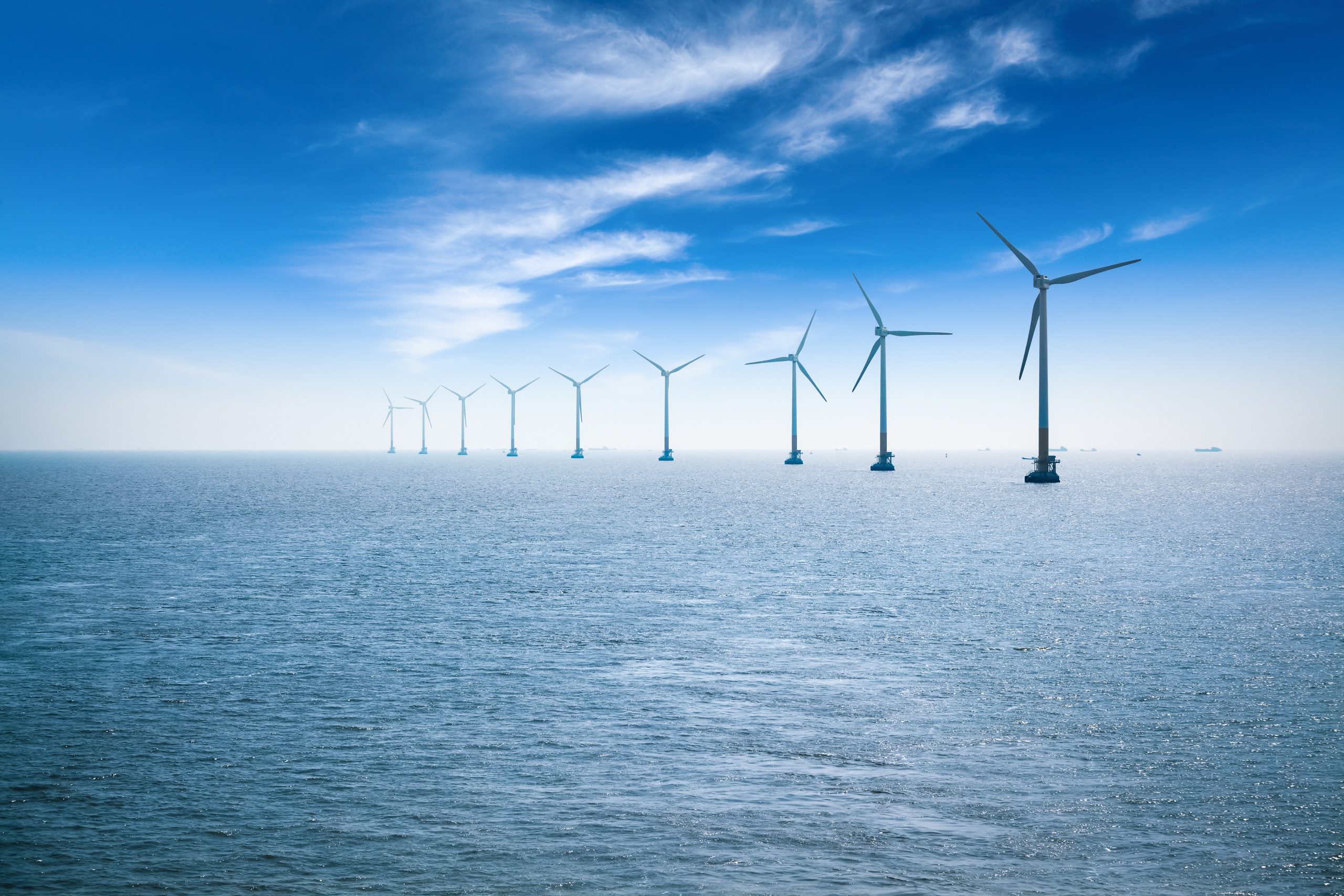
The recent announcement that Germany’s PNE AG lost its bid for a major wind project in Vietnam to a subsidiary of the domestic conglomerate Vingroup has sent shockwaves through the international renewable energy community.
For foreign investors eyeing Vietnam’s vast wind potential, the PNE AG case is not just a news story, it is a vital case study containing crucial lessons for future engagement.
The PNE AG vs. Vingroup Decision: A Surprise Turnaround
In early February 2026, authorities announced that VinEnergo, a newly established energy subsidiary of Vingroup, had been awarded the rights to develop Phase 1 of the Hon Trau wind power project off the coast of Binh Dinh province. This initial phase involves a capacity of 750 MW with an estimated investment of nearly $1.9 billion.
The decision came as a significant surprise. PNE AG had been deeply involved in the project’s development since 2019, investing large amounts of money in feasibility studies, wind measurements, and diplomatic groundwork. The German firm had planned a total investment of $4.6 billion for the eventual 2,000 MW project.
In contrast, VinEnergo is a new entrant with no prior track record in wind farm development. Reports suggest that Vietnamese authorities raised unexpected last-minute concerns regarding PNE’s “financial commitment,” specifically requesting a substantial upfront deposit of investment capital—a requirement that proved to be a decisive hurdle.
Key Lessons for Foreign Investors
The PNE AG experience highlights several critical realities of the current Vietnamese market:
– The Rise of “National Champions” Policy: The most significant takeaway is Vietnam’s apparent shift towards prioritizing domestic “National Champions” in strategic sectors like energy. The selection of VinEnergo, a local conglomerate with deep pockets but no sector experience, over a seasoned international developer aligns with a broader government strategy to build up domestic capabilities. Foreign investors must now operate with the understanding that they are competing against favored local players.
– Financial Commitment Requirements are Stringent and Evolving: The demand for a large upfront investment deposit caught PNE off guard. This indicates that Vietnamese authorities are adopting much stricter, and at times unpredictable, measures to ensure financial security and project delivery. Future investors must have robust financial backing and be prepared for sudden changes in capital requirements. Recent draft regulations have even proposed a minimum charter capital of $400 million for offshore wind developers.
– Domestic Partnership is No Longer Optional: Trying to go it alone, as PNE did, appears to be an increasingly difficult path. Emerging regulations suggest partnership with state-owned enterprises/domestic investors is mandatory. Building strong, strategic alliances with capable Vietnamese partners is now a critical success factor, not just for regulatory compliance but also for navigating local political and administrative landscapes.
– Regulatory Uncertainty Remains a Major Bottleneck” Despite the approval of the ambitious Power Development Plan VIII (PDP8), the practical legal framework for offshore wind remains murky. Key issues like marine spatial planning, clear permitting processes, and the division of authority between different government bodies are unresolved. This creating a high-risk environment where projects can stall for years.
– Long-Term Groundwork is Necessary but Not Sufficient: PNE’s six years of patient investment and relationship-building did not guarantee success. While a long-term commitment is essential in Vietnam, investors must also remain agile and responsive to sudden policy shifts.
Future Opportunities in Vietnam’s Offshore Wind Sector
Despite the challenges, the long-term opportunity in Vietnam remains immense. PDP8 sets ambitious targets of 6,000 MW of offshore wind capacity by 2030 and up to 17,032 MW by 2035, starting from zero today.
For investors willing to navigate the complex landscape, significant opportunities exist in coastal provinces with high wind potential remain primary targets, including Binh Thuan, Ninh Thuan, Soc Trang, Tra Vinh, Ben Tre, and Bac Lieu as listed by the PDP8.
Strategic Outlook: How to Win the Next Offshore Wind Tender in Vietnam
Looking forward, future bidders must move beyond traditional project development models and adopt a Vietnam-integrated strategy from day one.
First, partnership selection must be strategic, not symbolic. The right Vietnamese partner should bring more than name recognition. It must offer regulatory access, provincial alignment, financing credibility, and alignment with national industrial policy. Foreign developers should assess potential partners based on political capital, financial depth, state relationships, execution capacity, and long-term strategic alignment with Vietnam’s energy security goals.
Second, capital readiness must be front-loaded. Authorities increasingly prioritize financial certainty over technical pedigree. Investors should structure projects with visible, ring-fenced capital commitments, strong balance sheet backing, and credible local banking relationships. Demonstrating liquidity and deposit capability early can neutralize last-minute hurdles.
Third, localization must be real. Offshore wind is becoming not only an energy policy priority but an industrial policy instrument. Successful bidders will present credible plans for local supply chain participation, technology transfer, workforce development, and long-term domestic value creation. Vietnam wants capability building, not just kilowatt hours.
Fourth, government relations must be institutional, not personal. Offshore wind projects touch multiple ministries, provincial authorities, maritime agencies, and planning bodies. Investors must build coordinated engagement strategies that align central and provincial stakeholders from the outset.
Finally, foreign investors must shift mindset: Vietnam is no longer a frontier market seeking foreign leadership. It is an emerging power shaping its own industrial destiny. Success requires humility, adaptability, and structured co-development with domestic champions.
The lesson of Hon Trau is not that foreign investors cannot win in Vietnam. It is that they must win differently. Those who combine international offshore expertise with strong Vietnamese institutional partnership, financial certainty, and national alignment will not merely participate in Vietnam’s offshore wind future — they will help define it.
***
Please do not hesitate to contact Dr. Oliver Massmann under [email protected] if you have any questions or want to know more details on the above. Dr. Oliver Massmann is the General Director of Duane Morris Vietnam LLC.

