


By Dr. Oliver Massmann
General Director, Duane Morris Vietnam LLC
April 2026
INTRODUCTION: A HISTORIC SECOND CHANCE
Vietnam is embarking on what may be the most consequential infrastructure undertaking in its modern history. After the abrupt cancellation of its original nuclear programme in 2016, the country has reversed course with remarkable determination and speed. In November 2024, the National Assembly passed Resolution 174/2024/QH15, formally restarting nuclear power development in Khanh Hoa Province and reversing the suspension that had frozen the programme for eight years. That resolution was not a tentative step — it was a declaration of strategic intent backed by the full force of executive and legislative consensus.
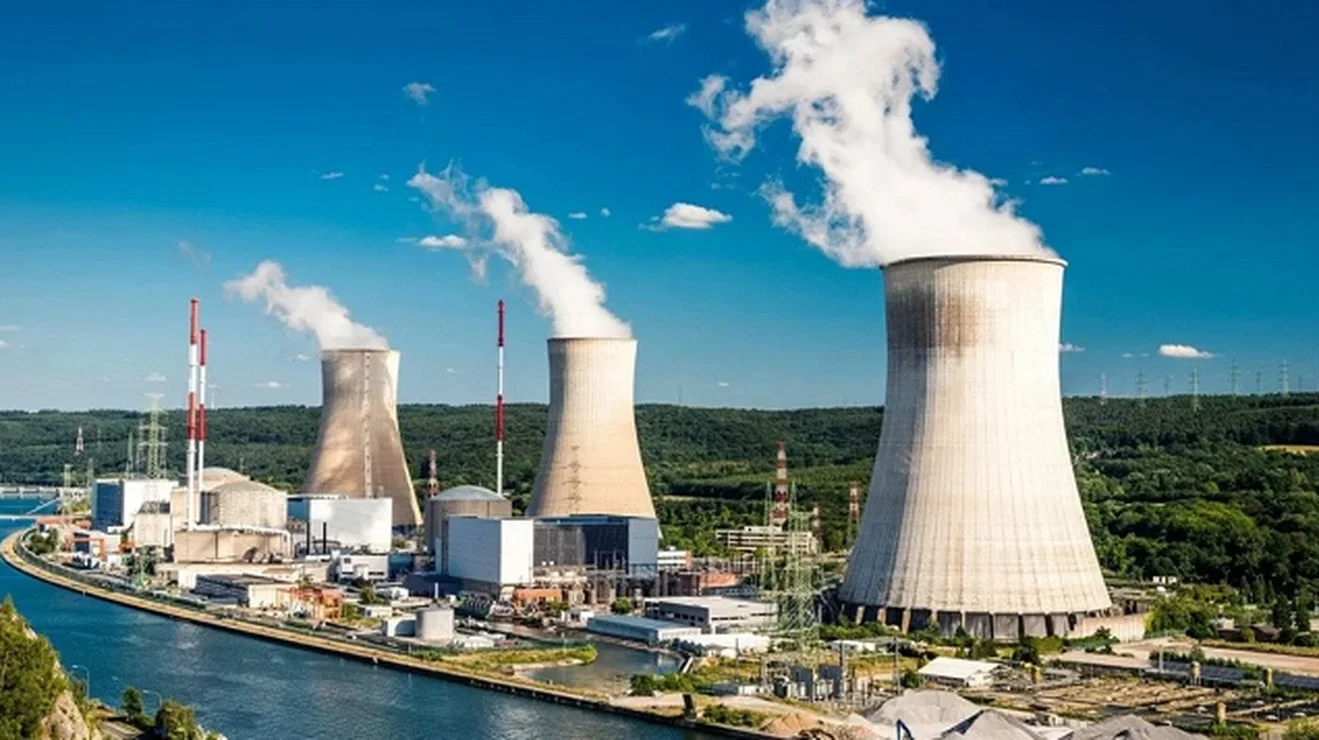
At the centre of this revival is the Ninh Thuận 2 Nuclear Power Plant, situated at Vĩnh Hải, Khanh Hoa Province. The plant has been entrusted to PetroVietnam (PVN) as its designated investor — creating a direct and structured entry point for experienced international nuclear investors with both the technology and the financial capacity to deliver a project of this scale. Vietnam entered into intergovernmental frameworks with multiple technology-exporting nations in the period 2010 to 2012, covering feasibility studies for the Ninh Thuận sites. Those frameworks, dormant for a decade, are now available to be reactivated on far stronger legal and commercial foundations than existed when they were first concluded.
This article analyses the legal and regulatory landscape governing the Ninh Thuận 2 project, explains why previous nuclear initiatives failed and why those failure modes have been structurally addressed, and sets out the specific legal workstreams that international investors and their counsel must master to bring this project to financial close and successful implementation.
Vietnam’s nuclear revival is not a political gesture. It is a legally entrenched, financially committed, and institutionally supported programme that will define the country’s energy landscape for the next fifty years. The question is not whether Ninh Thuận 2 will be built — it is who will build it, and who will guide it through Vietnam’s regulatory architecture.
- WHY THE PREVIOUS PROJECTS FAILED — AND WHY THIS TIME IS DIFFERENT
Understanding why Vietnam’s first nuclear programme collapsed is essential to understanding how the revived programme has been structurally redesigned to avoid the same fate. The 2016 cancellation was not a single event — it was the culmination of a cluster of intersecting legal, financial, and institutional failures.
1.1 The Five Root Causes of the 2016 Failure
Cost escalation without a bankable financing framework. The estimated investment for the two Ninh Thuận plants doubled from the original figure to approximately VND 400 trillion (then approximately USD 18 billion), pushing the per-kWh cost sharply upward. Vietnam lacked a sovereign financing model capable of absorbing this scale of commitment without breaching its public debt ceiling of 65% of GDP. There was no export credit agency-backed, multi-lender project finance structure in place — only bilateral government-to-government credit lines that sat awkwardly within Vietnam’s public investment law framework.
An incomplete regulatory and licensing framework. The 2008 Atomic Energy Law, while pioneering, was never accompanied by the full suite of implementing regulations needed to license, construct and operate a nuclear facility. Critical gaps existed in environmental impact assessment procedures for nuclear sites, nuclear safety authority independence, radiation protection licensing, and the legal treatment of nuclear waste. Foreign contractors had no clear legal framework governing liability, indemnification or force majeure in a nuclear context.
Absence of a coherent PPP and offtake structure. Vietnam had no PPP law capable of accommodating a project of this nature in 2016. The power purchase agreement framework had not been adapted to nuclear power’s specific characteristics: its very long construction period, its capital-intensive but fuel-efficient operating profile, and its need for a guaranteed, inflation-linked tariff over a 40 to 60 year asset life. Without a bankable PPA, no commercial lender or export credit agency would commit.
Post-accident public and political anxiety. The 2011 Fukushima Daiichi nuclear disaster triggered a global reassessment of nuclear safety. In Vietnam, it gave ammunition to those within the political establishment who had reservations about the programme’s timeline and cost. Public acceptance surveys showed declining support, and the National Assembly’s Science, Technology and Environment Committee repeatedly flagged safety regulation gaps as a reason to delay.
Institutional capacity deficit. Vietnam lacked the trained nuclear engineers, safety inspectors, and legal specialists needed to operate a nuclear regulatory authority at IAEA standards. The legal and technical institutions simply were not ready to manage a project of this complexity, and the absence of a critical mass of qualified nuclear professionals meant that even if the legal framework had been complete, implementation capacity would have been insufficient.
1.2 The Structural Reforms That Change the Calculus in 2026
Each of the above failure modes has been specifically addressed in the 2024 to 2026 reform cycle. This is not cosmetic repackaging of the same failed approach — it is a fundamentally different programme architecture.
A new Atomic Energy Law (Law No. 94/2025/QH15), effective 1 January 2026. Enacted on 27 June 2025 with near-unanimous National Assembly approval, this law replaces the 2008 framework entirely. It designates nuclear power as a national strategic priority and a ‘green power source’, introduces comprehensive lifecycle regulation from site survey through decommissioning, aligns Vietnam’s regulatory architecture with IAEA standards, strengthens VARANS as an independent nuclear safety authority, and — critically — introduces special mechanisms to facilitate financial and contractual arrangements for nuclear power plants. It also explicitly supports Generation III+ reactors and Small Modular Reactors (SMRs), future-proofing the framework for the most advanced reactor technologies available internationally.
Revised Power Development Plan VIII (Decision No. 768/QD-TTg, April 2025). For the first time, PDP8 formally incorporates nuclear power as a strategic baseload resource. It allocates 4,000 to 6,400 MW of nuclear capacity from Ninh Thuận 1 and 2 for commissioning in the 2030 to 2035 period, and projects a further 8,000 MW of nuclear capacity by 2050. This gives international investors and their lenders the policy certainty needed to underwrite a 40-year asset.
Designated investors and a prime ministerial steering committee. On 4 February 2025, Prime Minister Phạm Minh Chính formally assigned PVN as the investor for Ninh Thuận 2 and established a high-level steering committee chaired by himself. This executive architecture eliminates the institutional ambiguity that bedevilled the previous programme and gives the project a direct line to the highest levels of government decision-making.
IAEA Phase 2 INIR Clearance (December 2025). The IAEA’s Integrated Nuclear Infrastructure Review team, which conducted its Phase 2 mission in Vietnam from 1 to 11 December 2025, concluded that Vietnam has taken major steps to restart and accelerate the programme and to develop the required infrastructure. Phase 2 clearance is the IAEA’s validation that a country is ready to invite bids or negotiate a contract for its first nuclear power plant — the international imprimatur that lenders and export credit agencies require.
An accelerated human capital programme. A training programme mapped to 2035 is designed to produce approximately 3,900 qualified nuclear personnel across the two plants, combining university and postgraduate training, practical experience at the Đà Lạt research reactor, and partnerships with the IAEA and international counterparts. This directly addresses the human capital deficit that helped doom the original programme.
The 2016 failure was a failure of architecture, not of ambition. The 2026 programme has rebuilt that architecture from the ground up. The legal and regulatory foundations are now in place. What Vietnam needs now is experienced international partners who understand both the technology and the legal terrain.
- THE LEGAL AND REGULATORY FRAMEWORK GOVERNING NINH THUẬN 2
Successfully navigating Ninh Thuận 2 from concept to financial close requires mastery of a multi-layered Vietnamese legal framework. No single piece of legislation governs this project — it sits at the intersection of investment law, energy law, nuclear safety law, environmental law, public procurement law, PPP law, and the law of state-owned enterprises. Understanding how these layers interact is the core legal challenge, and it is precisely where experienced Vietnamese legal counsel is indispensable.
2.1 The Investment and Corporate Law Framework
PVN’s role as designated investor establishes the corporate and investment law baseline. As a state-owned enterprise operating under the Law on State-Owned Enterprises and the Law on Investment, PVN’s participation in a project of this scale requires investment policy approval at National Assembly level — a threshold already met through Resolution 174/2024/QH15. Any foreign participation — whether as technology provider, EPC contractor, equity investor, or lender — engages the Law on Investment 2020, which sets out the conditions for foreign investment in energy infrastructure designated as a sector of national security significance.
The foreign investor’s participation structure will need to be carefully designed. Whether entry is as an equity co-investor in a project company alongside PVN, as an EPC contractor with a technology licence, or as a combination of both, each structure carries distinct implications for the applicable regulatory approvals, the treatment of profits and capital repatriation, land use rights, and the enforceability of dispute resolution clauses. Vietnamese law permits international arbitration for investment disputes in the energy sector, but the governing law, seat, and institutional rules must be explicitly agreed — and must survive scrutiny under Vietnam’s mandatory regulatory provisions.
2.2 The New Atomic Energy Law — Key Provisions for Foreign Investors
Law No. 94/2025/QH15 is the cornerstone of the new regulatory architecture, and foreign investors must understand its structure thoroughly. Its key features from an investment and project finance perspective include:
- Licensing regime: The law establishes a sequential licensing process covering site licence, construction licence, and operating licence, each issued by VARANS subject to safety case review. The timeline and documentary requirements for each stage are more clearly specified than under the 2008 law, materially reducing the regulatory uncertainty that previously made it impossible to schedule export credit agency drawdowns against a reliable critical path.
- Technology approval: Generation III+ reactors are explicitly supported under the new law. The law provides for technology qualification procedures aligned with IAEA safety standards, streamlining the domestic licensing pathway for reactor designs that have already been certified by the IAEA and are operating commercially internationally.
- Special financial and contractual mechanisms: The law specifically introduces special mechanisms to facilitate financial and contractual arrangements for nuclear power plants. This is the legislative hook for negotiating bespoke PPA terms, government support agreements, and export credit agency financing structures that would otherwise sit awkwardly within Vietnam’s standard infrastructure procurement framework.
- Nuclear liability: The new law addresses the nuclear liability framework, including Vietnam’s obligations under international nuclear liability conventions. This is critical for export credit agency underwriting: lenders will require clarity on the extent of operator liability, the cap on third-party claims, and the availability of state backing for liability above the operator’s cap.
- Waste management and decommissioning: The law mandates a funded decommissioning plan and addresses the legal regime for nuclear waste storage and reprocessing. For project finance purposes, the decommissioning fund must be treated as a project cost and its funding mechanism built into the financial model from the outset.
2.3 The PPP and Public Procurement Framework
Vietnam’s Law on Public-Private Partnership Investment (PPP Law 2020, amended 2023) and the Law on Public Procurement govern the procurement of EPC services, equipment and the overall project structure. Several features of the PPP framework are particularly relevant to Ninh Thuận 2.
The PPP Law recognises energy as an eligible sector and provides for Build-Operate-Transfer structures with government revenue guarantees. However, nuclear power’s economics — very high capital cost, very long payback period, very low marginal operating cost — do not fit neatly into the standard BOT template. The new Atomic Energy Law’s ‘special mechanisms’ provision was specifically designed to create space for a bespoke nuclear PPP structure capable of attracting international project finance on bankable terms.
Public procurement rules require that EPC contracts above specified thresholds go through competitive international tendering unless specific exemptions apply. Where an intergovernmental framework between Vietnam and a technology-exporting nation already exists, there is a legally defensible basis for a negotiated technology selection process. This must, however, be carefully structured to withstand scrutiny under the procurement law and to comply with the transparency requirements that multilateral development banks and export credit agencies impose as conditions of their financing.
2.4 The Power Purchase Agreement and Offtake Framework
The single most important document for project bankability is the power purchase agreement. Under Vietnam’s current regulatory framework, EVN retains the offtake monopoly for electricity generated from nuclear plants, with MOIT approving tariff levels. The nuclear tariff will need to be negotiated to reflect:
- The very long construction period — a minimum of eight to ten years to first commissioning even under the government’s ambitious target — and the corresponding interest during construction;
- A capacity payment structure that covers fixed costs regardless of dispatch, given nuclear’s essential role as baseload power;
- A foreign exchange component in the tariff to protect the investor’s returns against VND depreciation over the life of the asset;
- Force majeure provisions that address nuclear-specific events — emergency shutdown, regulatory-ordered outage — as well as conventional infrastructure force majeure;
- Step-in rights for lenders and export credit agency counterparties in the event of PVN default or government action.
Negotiating a PPA of this complexity with EVN and MOIT requires counsel with deep relationships in both institutions and a track record of structuring bankable offtake agreements in the Vietnamese power sector. This is not a document that can be drafted from first principles by counsel without Vietnamese energy market experience.
2.5 MOIT, MOF, VARANS and Inter-Ministerial Coordination
Ninh Thuận 2 will require approvals, licences, and policy actions from at least five central ministries and several provincial authorities:
- Ministry of Industry and Trade (MOIT) — investment policy, PPA approval, grid connection, and nuclear plant siting within the PDP8 framework;
- Ministry of Finance (MOF) — government guarantee terms, tax treatment of the project company and EPC contractor, customs duty exemptions for nuclear equipment, and decommissioning fund regulation; foreign investment registration, approval of foreign equity participation, and coordination of concessional financing;
- VARANS / Ministry of Science and Technology — nuclear safety licensing, radiation protection approvals, and environmental radiation monitoring;
- Ministry of Natural Resources and Environment — environmental impact assessment approval, land use rights for the plant site and exclusion zone, and coastal zone management for the seawater cooling intake;
- Khanh Hoa Provincial People’s Committee — land clearance, resettlement of affected communities, and local construction permits.
Coordinating approvals across this landscape — in sequence, without creating bottlenecks that delay the critical path — requires Vietnamese legal counsel who understands the internal administrative processes of each ministry, has established working relationships with the relevant directors-general and department heads, and has experience managing multi-ministry approval processes on major infrastructure projects.
III. THE STRATEGIC ADVANTAGE OF AN ESTABLISHED INTERGOVERNMENTAL FRAMEWORK
Among the factors that will determine which international nuclear investor secures a role in Ninh Thuận 2, the existence of a pre-existing intergovernmental framework with Vietnam is the single most decisive legal and commercial differentiator. Vietnam entered into bilateral nuclear cooperation agreements with multiple technology-exporting nations between 2010 and 2012, covering feasibility studies and technology transfer for the Ninh Thuận sites. These agreements were never formally terminated. They represent a dormant but legally operative foundation that can be reactivated and updated to reflect the new investor structure, the new legal framework, and the current state of the project.
An investor whose government holds such a framework with Vietnam enjoys several structural advantages over competitors approaching from a standing start. First, it has a legally grounded basis for priority engagement with PVN and the relevant ministries that does not depend on winning an open competitive tender. The new Atomic Energy Law’s special mechanisms provisions, combined with an existing intergovernmental framework, provide a legally defensible pathway for direct negotiation. Second, the intergovernmental framework accelerates the investment registration process with MOF, the technology qualification process with VARANS, and the government support agreement negotiations with MOF — all of which sit on the critical path to financial close. Third, it signals to the export credit agencies and multilateral development banks that will ultimately finance the project that the bilateral relationship has been tested and endorsed at the highest governmental level.
The legal work required to operationalise an existing intergovernmental framework — updating it to name PVN as counterparty, incorporating the 2025 Atomic Energy Law’s new licensing regime, and aligning it with the revised PDP8 capacity and timeline commitments — is technically complex but well-defined. It requires Vietnamese legal counsel who can engage directly with the Ministry of Foreign Affairs, MOIT, and the National Assembly committees that will need to ratify any updated framework, and who understands precisely how an intergovernmental agreement translates into domestic Vietnamese legal obligations.
Beyond the intergovernmental dimension, an investor whose Generation III+ reactor technology has received international regulatory certification — including IAEA Generic Reactor Safety Review validation — holds a further structural advantage in the Vietnamese licensing process. VARANS, in reviewing a site licence application, will give significant weight to the regulatory track record of the technology internationally. A reactor design with a clean operational record and established international certification will move through Vietnam’s domestic qualification process materially faster than an untested or less-certified design. This directly affects the critical path to financial close.
Finally, investors who have already established working relationships with PVN — including through workforce training programmes, technical cooperation agreements, or previous feasibility study work — hold an institutional advantage that cannot be replicated quickly by a new entrant. PVN is not simply a counterparty; it is the designated investor and will ultimately be the operating entity for Ninh Thuận 2. The quality of the working relationship between PVN and its international partner will shape every phase of the project, from initial design through commissioning.
The investors best positioned to succeed at Ninh Thuận 2 are not necessarily those with the largest balance sheets or the most advanced reactor technology in isolation — they are those who have the right legal foundations in place, the right relationships with Vietnamese institutions, and the right legal counsel to translate those advantages into binding, bankable agreements.
- HOW NINH THUẬN 2 CAN BE IMPLEMENTED IN PRACTICE — THE LEGAL ROADMAP
The central question for any investor contemplating Ninh Thuận 2 is practical: can this project actually be done within Vietnam’s legal system? The answer — drawing on 25 years of experience advising on Vietnam’s largest infrastructure projects — is yes, but it requires a phased, legally disciplined approach that acknowledges and navigates the specific features of Vietnamese law.
Phase 1: Pre-Development and Framework Agreements (2026–2027)
- Intergovernmental Agreement activation. Any existing bilateral nuclear cooperation agreement with Vietnam should be updated or supplemented to reflect the new investor structure — PVN rather than EVN as the Vietnamese counterparty — the 2025 Atomic Energy Law’s new licensing regime, and the revised PDP8 capacity and timeline commitments. This updated agreement is the legal foundation for all subsequent bilateral arrangements and must be concluded at the level of the Ministry of Foreign Affairs and MOIT.
- Memorandum of Understanding with PVN. Simultaneously, a binding MOU between the foreign investor and PVN should establish the commercial framework — equity stake percentage, technology licence terms, EPC scope, and the governance of a joint steering committee. This MOU must comply with PVN’s state-owned enterprise governance requirements under Vietnamese law as well as the investor’s own corporate authorisation procedures.
- Investment Registration and Pre-Licensing. The foreign investor’s registration with the Ministry of Planning and Investment should be initiated in parallel, and the preliminary nuclear site licence application to VARANS should begin to be prepared. These are long-lead-time administrative processes that cannot be deferred without delaying the overall critical path.
Phase 2: Regulatory and Commercial Structuring (2027–2029)
- Nuclear safety licensing. The site licence application — the first of three sequential licences under the new Atomic Energy Law — requires a comprehensive safety analysis report, a site characterisation report addressing seismicity, hydrology and coastal geology at Vĩnh Hải, and a preliminary safety case for the proposed reactor design in the Vietnamese operating environment. VARANS review typically takes 18 to 24 months. The application must be prepared in Vietnamese and must address all 19 IAEA infrastructure issues.
- PPA negotiation with EVN and MOIT. PPA negotiations should commence in parallel with licensing so that tariff and offtake terms can be reflected in the financial model that supports export credit agency applications. Key negotiating points are the capacity payment level, the foreign exchange indexation mechanism, the government support agreement backstopping EVN’s payment obligations, and the lender step-in rights framework.
- Export credit agency and multilateral financing. Mandate letters from the relevant export credit agencies should be sought once the PPA term sheet is agreed and the licensing pathway is clear. Participation by multilateral development banks — including the ADB and AIIB — should be explored for the grid connection and transmission infrastructure, which can be structured separately from the nuclear plant itself and may attract more favourable multilateral financing terms.
- EPC contract structuring. The EPC contract between the project company and the construction consortium must be structured under a governing law acceptable to Vietnamese regulatory authorities. Vietnamese law will apply to land, environmental and labour matters; international arbitration (SIAC, ICC or VIAC) should govern commercial disputes. The contract must include performance bonds, liquidated damages for delay, a nuclear completion guarantee, and a parent company guarantee from the international investor.
Phase 3: Financial Close and Construction (2029–2035)
- Financial close conditions precedent. All nuclear licences, land use rights, grid connection agreements, government guarantees, and export credit agency approvals must be in place before financial close. The conditions precedent checklist for a nuclear project of this size will be the most complex in Vietnamese infrastructure finance history, and its management requires a dedicated legal team with both Vietnamese law expertise and international project finance experience.
- Construction phase legal management. Throughout the construction period, Vietnamese legal counsel will be required to manage ongoing regulatory compliance, respond to VARANS inspection findings, handle land and resettlement matters in Khanh Hoa Province, and advise on any changes in Vietnamese law that affect the project’s bankability or the EPC contractor’s obligations.
- Nuclear fuel supply and waste management agreements. Separate agreements for nuclear fuel supply and spent fuel management must be concluded. These engage Vietnam’s obligations under the Non-Proliferation Treaty and its IAEA safeguards agreement, and must be consistent with the new Atomic Energy Law’s provisions on nuclear material control.
- WHY DUANE MORRIS VIETNAM IS THE RIGHT LEGAL PARTNER
The foregoing analysis makes clear that Ninh Thuận 2 is not a project that can be handled by a general commercial law firm with limited Vietnam experience, or by an international firm operating without deep Vietnamese regulatory knowledge. It requires a firm that combines:
- Mastery of the new Vietnamese regulatory framework — the 2025 Atomic Energy Law, the revised PPP Law, the Investment Law, and PDP8 — applied specifically in a nuclear project context;
- Established relationships with MOIT, MOF, VARANS, EVN, and PVN, built over decades of advisory work on Vietnam’s largest energy and infrastructure transactions;
- Proven experience in structuring export credit agency-backed project financings in Vietnam, including familiarity with the requirements of multilateral development banks, bilateral ECAs, and international commercial lenders;
- The ability to advise in Vietnamese — not merely to translate documents, but to engage substantively with Vietnamese regulatory authorities, National Assembly committees, and government ministries in their own language and on their own legal terms;
- The institutional backing of an international firm with the resources, professional indemnity coverage, and cross-border capability to support a mandate of this scale.
Duane Morris Vietnam, under the leadership of Dr. Oliver Massmann, is the only foreign law firm in Vietnam that meets all of these criteria. Dr. Massmann is the only foreign lawyer ever to have been invited to present to Vietnam’s National Assembly in Vietnamese — a distinction that reflects 25 years of engagement with the country’s legal and regulatory institutions at the highest level. His firm has advised on the EU-Vietnam Free Trade Agreement, on major energy and power transactions involving EVN, PVN, and their subsidiaries, and on Vietnam’s evolving PPP and investment framework across multiple sectors.
On Ninh Thuận 2 specifically, Duane Morris Vietnam brings the full weight of that experience to bear. We understand the legal architecture that has been constructed since November 2024. We have established working relationships with the officials at MOIT, VARANS, and MOF who will process the licence applications and investment approvals. We have structured PPAs under the conditions that EVN imposes. We have advised international investors on structuring their Vietnam investments to maximise protection and minimise approval delay. And we have the language capability, the institutional relationships, and the legal expertise to manage the multi-ministry approval process that will determine the project’s critical path.
Having Duane Morris Vietnam as local counsel on Ninh Thuận 2 is not a compliance formality — it is a strategic investment in the licence approvals, regulatory relationships, and legal architecture that will determine whether the project actually gets built on time and on budget.
CONCLUSION: THE WINDOW IS OPEN — NOW IS THE TIME TO ACT
Vietnam’s Ninh Thuận 2 Nuclear Power Plant is not a future possibility. It is a present reality, advancing on a legal and institutional foundation that is more robust than anything that existed in 2016. The National Assembly has spoken. The Prime Minister has spoken. The new Atomic Energy Law is in force. The IAEA has validated Vietnam’s readiness. PVN has been designated as investor. The revised PDP8 has allocated the capacity and set the timeline.
The legal work — investment structuring, nuclear licensing, PPA negotiation, export credit agency financing, EPC contract drafting, and multi-ministry regulatory coordination — is complex, but it is navigable. Vietnam’s legal system, for all its complexity, has demonstrated that it can accommodate projects of this magnitude when the right legal architecture is built from the outset. The difference between success and the 2016 failure lies not in the ambition of the project, but in the quality of the legal and institutional design that supports it.
For international investors who hold existing intergovernmental frameworks with Vietnam, the strategic window is open now. Competitors are already in motion. The investor for Ninh Thuận 2 — PVN — is ready to engage. The new legal architecture is in place. What is needed now is the legal expertise to execute, and the determination to act before the window narrows.
Duane Morris Vietnam stands ready to serve as Vietnamese legal counsel on this landmark project. For enquiries, please contact Dr. Oliver Massmann at [email protected].

