


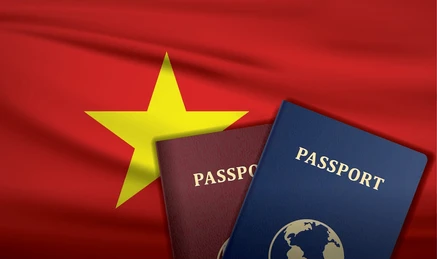
Vietnam has quietly introduced one of the most meaningful changes to its nationality framework in recent years.
On 24 June 2025, the National Assembly adopted amendments to the Law on Vietnamese Nationality (Law No. 79/2025/QH15), which will take effect from 1 July 2025. While the amendments may appear technical at first glance, they reflect a clear policy shift: Vietnam is becoming more open, more pragmatic, and more internationally aligned when it comes to citizenship.
For many individuals—especially overseas Vietnamese, foreign investors, and families with ties to Vietnam—this opens up new and very real opportunities.
Restoration of Vietnamese nationality – a more open approach
Under the previous regime, regaining Vietnamese nationality was often difficult and subject to quite strict conditions.
This has now changed in a fundamental way.
Going forward, anyone who has previously held Vietnamese nationality can apply to restore it, and their application must be considered. This does not mean automatic approval, but it significantly lowers the entry barrier and introduces a much more flexible approach.
One practical point to be aware of: applicants are generally required to resume their Vietnamese name. However, if they wish to retain a foreign nationality at the same time, they may adopt a combined Vietnamese–foreign name, which will be formally recognized in the approval decision.
In practice, this will make it much easier for members of the Vietnamese diaspora to reconnect legally with Vietnam.
Easier naturalization – especially for those with ties to Vietnam
The amendments also relax the standard requirements for acquiring Vietnamese nationality.
Traditionally, applicants needed to demonstrate Vietnamese language proficiency, a minimum period of residence, and financial self-sufficiency. These conditions still exist in principle, but the law now provides for broad exemptions.
For example, individuals who are married to a Vietnamese citizen or who have a Vietnamese child are exempt from key requirements such as language proficiency, residency, and financial capacity.
Even more far-reaching are the exemptions for individuals with Vietnamese parents or grandparents, those who have made meaningful contributions to Vietnam, and minors with Vietnamese parents. In these cases, even the requirement to reside in Vietnam can be waived.
This reflects a clear policy intention: Vietnam wants to facilitate citizenship for those who have a genuine connection to the country or who can contribute to its development.
Dual nationality – a significant step forward
Perhaps the most notable development is the more explicit acceptance of dual nationality.
While Vietnam has historically taken a cautious approach in this area, the amended law now allows applicants to retain their foreign nationality in certain cases—particularly where there are family ties to Vietnam or where the individual contributes to the country.
There are still conditions: the retention of foreign nationality must comply with the laws of the other country and must not be contrary to Vietnam’s interests. But overall, this is a meaningful and welcome shift.
From a practical perspective, this change will be particularly relevant for international professionals, investors, and globally mobile families.
Applications from abroad – a practical improvement
Another important change is procedural.
Applicants no longer need to be physically present in Vietnam to submit their application. It is now possible to file through Vietnamese embassies or consulates abroad. These authorities are required to process and forward applications within a defined timeframe.
This may sound like a small administrative adjustment, but in practice it removes a major hurdle and makes the process far more accessible.
Faster processing times
The law also introduces shorter timelines at key stages of the application process. While the system will still require coordination between various authorities, the intention is clearly to make procedures more efficient and predictable.
What this means in practice
Taken together, these changes signal a broader shift in policy.
Vietnam is positioning itself as a country that:
- values its global diaspora
- welcomes international talent and investment
- and recognizes the realities of cross-border lives
For individuals who have been considering applying for Vietnamese nationality—or restoring it—this is a good moment to revisit those plans.
A final practical note
As always, the real test will be in the implementation. Further guidance from the government is expected, and practical handling may evolve over time.
That said, the direction is clear—and it is positive.
***
For more information on the above, please do not hesitate to contact the author Dr. Oliver Massmann under [email protected]. Dr. Oliver Massmann is the General Director of Duane Morris Vietnam LLC.

