


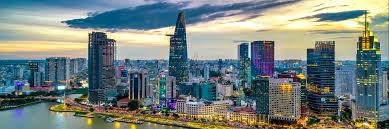
What is the New Vietnam? Why This Question Matters to Me
I arrived in Vietnam in 1991. The country I stepped into bore little resemblance to the one I serve today. I did not come as a tourist, or a journalist, or even entirely as a lawyer. I came, in some sense, as a believer — in the potential of a place, a people, and a process of transformation that I sensed was only just beginning.
Over the past 35 years, I have watched Vietnam grow from a post-embargo economy cautiously opening its doors, to one of Southeast Asia’s most dynamic and structurally ambitious nations. I have had the privilege — and the responsibility — of advising at the intersection of that transformation: foreign investment frameworks, trade agreements, energy law, regulatory reform.
But the question posed is not a legal one. It is a deeply human one. And I want to answer it as a human being who has made this country his home.
I do not speak about Vietnam from the outside. I speak from within — as someone who chose to stay, to learn the language, to earn the trust of institutions that did not have to open their doors to me.
What I Value in the ‘Old’ Vietnam
The Vietnam I first encountered had something rare: an almost stubborn sense of dignity. A country that had survived centuries of invasion, decades of war, and years of isolation — yet had not lost its belief in itself. That quiet resilience was not a slogan. It was visible in the streets, in the markets, in the way people looked you in the eye.
The ‘old’ Vietnam also had an extraordinary relationship with collective effort. Communities looked after one another. The bonds of family and neighbourhood were not sentimental — they were structural. They held people together through hardship in ways that no institution could replicate.
And there was something else I valued enormously: patience. Vietnamese society knew how to wait. How to build slowly. How to treat trust as something earned, not claimed.
WHAT I CARRY FROM THOSE EARLY YEARS:
› Relational depth – business here has always been built on trust forged over time, not transactions
› Cultural continuity – a society that honors its past even as it races toward its future
› Resilience without bitterness – a person who has every reason to carry grievance, yet choose openness
› Humility in learning – Vietnam taught me that expertise must be earned in context, not imported
What the New Vietnam Is Becoming
The Vietnam of 2026 is extraordinary. It is not the country I arrived in — and I mean that as the highest possible compliment. The pace, ambition, and sophistication of its transformation have exceeded everything I imagined when I first set down roots here.
Vietnam is now a country that writes its own rules — literally. I have had the honor of advising on the EU-Vietnam Free Trade Agreement, which placed Vietnam in an entirely different category of global trade partner. The legal and regulatory architecture being built today would have been unrecognizable thirty years ago.
The new generation of Vietnamese leaders, entrepreneurs, and professionals carries something powerful: they have inherited the resilience and cultural depth of their parents, while operating with global fluency, technological confidence, and extraordinary ambition. They are not copying other models. They are designing their own.
And then there is the single most transformative milestone of this era — one that I believe will define Vietnam’s place in the world for the next generation: Vietnam’s upgrade to Emerging Market Status in September 2026.
This is not a technicality. This is a declaration to global capital markets that Vietnam belongs at the top table — on par with China, India, Brazil, and the world’s great growth economies.
For 35 years I have watched international investors approach Vietnam with admiration tempered by hesitation. That hesitation ends now. Emerging Market classification triggers automatic inclusion in the world’s most influential investment indices, unlocking hundreds of billions of dollars in institutional capital that was structurally prohibited from entering Vietnam before. Sovereign wealth funds, pension funds, global asset managers – they are not coming to explore. They are coming to invest, and to stay.
The implications for Vietnam’s legal, regulatory, and commercial landscape are profound. Governance standards will rise to meet the expectations of the world’s most sophisticated investors. Transparency, rule of law, and institutional consistency — the very things I have spent 35 years advocating for — will no longer be aspirational. They will be competitive requirements. Vietnam will have to deliver them, and I believe it will.
This is the moment Vietnam has been building toward since Doi Moi. And for those of us who have been here long enough to remember the starting point, it is nothing short of extraordinary.
The New Vietnam is not a destination — it is a direction. And the direction is unmistakably forward, unmistakably Vietnamese, and unmistakably significant for the world.
WHAT GIVES ME GENUINE OPTIMISM:
› Emerging Market Status – September 2026 – a historic reclassification placing Vietnam on par with China, India and the world’s great growth economies – unlocking global institutional capital at scale
› Human capital – the quality, drive, and global mindedness of Vietnam’s young professionals is world-class
› Strategic positioning – Vietnam has navigated a complex geopolitical environment with remarkable poise
› Green transition leadership – Vietnam’s carbon credit frameworks and energy transition ambitions are genuinely forward-looking
› Cultural confidence – the New Vietnam does not need to choose between tradition and modernity – it is holding both
What I Hope to See Next
I am not romantic. After 35 years in the field, I understand that transformation is not linear, and that progress always produces new tensions. So, when I speak about what I hope for, I speak as a practitioner — someone who has sat across the table from ministries, courts, and boardrooms.
I hope Vietnam will continue to build institutions that outlast individuals. The quality of a legal system, an investment framework, or an energy policy is ultimately measured not by what it says on paper, but by whether it is consistently applied. This is Vietnam’s next great challenge — and its next great opportunity.
I hope Vietnam will protect the things that made it extraordinary in the first place. The relational culture. The long-term thinking. The capacity to hold complexity without being paralyzed by it. These are competitive advantages in a world that is increasingly impatient and transactional.
And I hope – perhaps most personally – that Vietnam will remain a place where outsiders who commit to it, learn from it, and serve it with integrity are welcomed. That openness has defined my own story here. It has made me a better lawyer, a better thinker, and a better human being.
Closing
Thirty-five years ago, I made a choice. Not just a career choice — a life choice. I chose to be here, to learn the language, to earn a place at the table, and to contribute to something larger than myself.
The New Vietnam, at its best, is a country that rewards that kind of commitment. It is a country that is building something real, something durable, and something the world should pay much closer attention to.
I am proud to have played even a small role in that story. And I look forward — with genuine excitement — to what comes next.
Xin cảm ơn. Vietnam, you have my respect, my admiration — and my heart.
***
Please do not hesitate to contact Dr. Oliver Massmann under [email protected] if you have any questions or want to know more details on the above. Dr. Oliver Massmann is the General Director of Duane Morris Vietnam LLC.

