


Vietnam is moving rapidly into the next stage of its digital development.
Artificial intelligence, cloud computing, digital banking, e-commerce, smart manufacturing, 5G and the Internet of Things are all creating enormous demand for computing capacity and secure data storage. At the same time, Vietnam wants to move further up the technology value chain and establish itself as an increasingly important digital and high-tech economy in Southeast Asia.
All of this requires one thing that is sometimes overlooked when we talk about the digital economy: physical infrastructure.
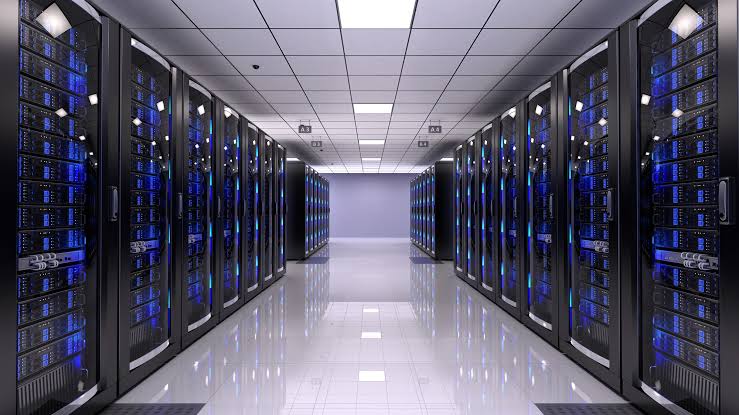
And one of the most important parts of that infrastructure will be data centers.
For international investors, hyperscalers, cloud providers, infrastructure funds and technology companies, Vietnam therefore deserves serious attention. But anyone considering a major data-center investment should understand from the outset that this is not simply a real-estate development with servers inside.
A data center in Vietnam brings together investment law, telecommunications regulation, land, electricity, construction, environmental requirements, fire safety, cybersecurity, personal-data protection and tax considerations.
All of these issues matter.
But if I had to identify the issue that is likely to become increasingly decisive for major projects, it would be very simple:
Power.
Vietnam Is Opening the Door
Vietnam’s legal and policy direction has changed considerably in recent years.
The Telecommunications Law 2023 established a specific regulatory framework for data-center and cloud-computing services. Importantly for international investors, Vietnam does not impose a specific foreign ownership ceiling on enterprises providing these services.
This means that, depending on the exact activities of the project, a foreign investor can in principle establish a 100% foreign-owned data-center business in Vietnam.
That is an important signal.
Vietnam has also continued to strengthen the broader legal framework for the digital economy. The Law on Digital Technology Industry, adopted in 2025 and effective from 1 January 2026, provides a further legal foundation for the development of digital technology infrastructure.
The new Law on Investment, effective from 1 March 2026, together with its implementing regulations, is also relevant for investors considering large-scale digital infrastructure.
The overall direction is clear: Vietnam wants more investment in sophisticated digital infrastructure.
But an open investment environment does not mean that developing a data center is simple.
Foreign ownership is only the first question.
Structure the Investment Around the Project
One of the earliest decisions will be how to structure the investment.
A foreign investor may establish its own Vietnamese project company, cooperate with a Vietnamese partner, acquire an existing company or project, or consider another suitable investment structure.
There is no universally correct answer.
A Vietnamese partner may contribute local development expertise, existing land or infrastructure relationships and experience dealing with the relevant authorities. A wholly foreign-owned company may provide greater control over governance, operations and technology. An acquisition can shorten the development period but brings historical liabilities and due-diligence risks.
The important point is to avoid choosing a corporate structure in isolation.
Before doing so, the investor should understand who will control the land, who will own the data-center assets, who will secure the electricity connection, who will contract with customers, who will provide any regulated services and who will be responsible for obtaining and maintaining the necessary approvals.
The legal structure should follow the commercial and technical reality of the project—not the other way around.
The Right Land Is About Much More Than Location
For a conventional property investment, location may be the dominant consideration.
For a data center, the analysis is considerably more complicated.
Of course, the investor needs secure land rights, an appropriate land-use purpose and sufficient tenure for the economic life of the project. Planning, construction rights, access, environmental restrictions and existing encumbrances all require careful due diligence.
But the physical characteristics of the site are equally important.
Can it obtain sufficient electricity? Is there enough room for substations and other infrastructure? Can the project obtain diverse fiber connections? Is the site exposed to flooding? What cooling solution will be required? Can the facility expand later?
These questions need to be considered together.
A site can look excellent on paper and still be unsuitable for a major data center.
For a long-term project, the investor should also make sure that the land tenure corresponds to the expected investment horizon. Spending hundreds of millions of dollars on sophisticated digital infrastructure while having uncertainty over the underlying land would create an obvious structural risk.
Power Comes Before the Building
This is, in my view, one of the most important points for anyone considering a major data-center investment in Vietnam.
Do not secure a site first and ask about electricity later.
Large data centers consume enormous amounts of electricity. Artificial-intelligence infrastructure will make this issue even more important.
The investor therefore needs to know, before committing substantial capital, how much power is actually available, when it can be supplied, what grid infrastructure is required, who will finance any necessary upgrades and what degree of redundancy can realistically be achieved.
A promise that electricity will eventually become available is not the same as bankable power availability.
The issue is also changing because major international technology companies increasingly have their own renewable-energy and carbon-reduction commitments.
Vietnam has established a framework for direct power purchase arrangements between renewable-energy generators and large electricity consumers. The framework, introduced under Decree No. 57/2025/ND-CP and subsequently developed further, could become increasingly relevant to large digital infrastructure projects.
This changes the question investors should ask.
It is no longer simply:
Can I obtain enough electricity?
It should be:
Can I obtain enough reliable, competitively priced and increasingly low-carbon electricity for the entire life of this investment?
For a hyperscale data center, the answer to that question may determine the viability of the entire project.
Understand Exactly What Business You Are Operating
Another important point is the distinction between owning the infrastructure and providing services from it.
Vietnam’s Telecommunications Law expressly regulates data-center and cloud-computing services. Investors therefore need to examine carefully what the Vietnamese entity will actually do.
Will it simply own the building and lease space?
Will it provide colocation?
Will it provide cloud-computing services?
Will it provide connectivity or managed services?
Will telecommunications services form part of the offering?
The answers matter because different activities can lead to different regulatory requirements.
For this reason, I would encourage any investor to ask three simple questions before finalizing the investment structure:
What are we building? What are we operating? What are we selling?
They sound similar, but legally they may produce very different answers.
Cybersecurity and Data Protection Must Be Part of the Design
A data center exists to store, process and transmit information. Data regulation and cybersecurity therefore go to the heart of the business.
Vietnam’s regulatory framework has developed substantially.
The Law on Personal Data Protection came into effect on 1 January 2026. Vietnam’s new Cybersecurity Law became effective on 1 July 2026. Together with Vietnam’s wider data legislation and implementing regulations, these laws form an increasingly sophisticated regulatory environment for companies handling data.
An operator therefore needs to understand what data will be processed, whether personal data is involved, who controls and processes that data, whether information will move across borders and whether particular customers or categories of information are subject to additional requirements.
This becomes especially important when customers are banks, financial institutions, healthcare companies, telecommunications businesses or government bodies.
Cybersecurity and data protection should therefore not be left to the legal department shortly before operations commence.
They should be incorporated into the technical design, operating procedures and customer contracts from the beginning.
Construction and Permitting Need One Integrated Strategy
Although the product is digital, the facility itself remains a major infrastructure project.
Depending on the particular development, investors may need to address investment procedures, land matters, planning, construction, environmental requirements, fire prevention and firefighting, electricity infrastructure, grid connection and operational requirements.
The challenge is often not one individual approval. It is the interaction between them.
A design change can affect fire-safety compliance. A different cooling solution may have environmental consequences. A change in power configuration may affect technical design and construction.
For this reason, the permitting process should not be divided into isolated workstreams that only meet when something goes wrong.
A major data-center project needs one integrated legal, technical and permitting roadmap, identifying dependencies and the critical path from site selection through construction to commercial operation.
Fire Safety Deserves Particular Attention
Data centers combine high electrical loads, battery systems, backup generators, fuel, cooling equipment and extremely valuable electronic infrastructure.
Fire prevention and firefighting requirements therefore need to be addressed at the design stage.
International developers naturally bring international engineering and safety standards to Vietnam. That is positive, but international standards do not automatically replace Vietnamese legal requirements.
The project needs to satisfy three things simultaneously:
Vietnamese law, international technical standards and customer requirements.
Designing for all three from the outset is considerably easier and less expensive than redesigning a facility after regulatory issues arise.
Sustainability Is Becoming Commercial
Environmental performance is also becoming much more than a compliance exercise.
Electricity efficiency, cooling technology, water consumption, renewable-energy sourcing and carbon intensity increasingly influence financing decisions and customer demand.
For international hyperscalers, environmental performance may form part of the decision whether to contract capacity from a particular facility.
That means sustainability increasingly has a direct commercial value.
A Vietnamese facility that can demonstrate reliable electricity, efficient cooling, competitive Power Usage Effectiveness and credible access to renewable energy may have a significant advantage over a facility that merely complies with minimum regulatory standards.
In the data-center sector, sustainability is becoming part of competitiveness.
Look at Investment Incentives Before Making the Investment
Vietnam’s evolving investment framework may also provide important opportunities for qualifying digital infrastructure projects.
The new Investment Law and its implementing regulations should therefore be reviewed carefully at the structuring stage, together with the Law on Digital Technology Industry and the applicable tax and land legislation.
Depending on the project’s size, technology, location and other statutory conditions, investment incentives or support may be available.
The important practical point is timing.
Do not develop the project and only afterwards ask whether incentives were available.
The better approach is to identify the potentially available incentives first, test whether the project qualifies and then incorporate that analysis into the investment structure.
Where incentives materially affect the financial model, the investor should seek sufficient certainty before taking the final investment decision.
A Bankable Project Is More Than a Completed Building
Financing institutions will look far beyond whether the data center can physically be constructed.
They will want certainty over land tenure, power availability, grid connection, construction risk, regulatory approvals, insurance, customer contracts, foreign-exchange exposure, security arrangements and the ability of the project to service its debt.
Long-term contracts with strong anchor customers can be particularly important.
This is another reason why the technical, commercial, financing and legal workstreams should develop together.
The customer contract itself can be critical.
Hyperscale customers may demand strict commitments regarding uptime, power, security, access, disaster recovery, cybersecurity, maintenance, liability and business continuity.
A developer should understand these requirements before the facility’s design is frozen.
There is little value in constructing a technically excellent data center that does not meet the requirements of the customers expected to use it.
Acquiring an Existing Data Center Can Be Faster—but Not Necessarily Easier
Some investors will prefer to acquire an existing Vietnamese data-center business or facility rather than develop a greenfield project.
That can certainly accelerate market entry.
But due diligence needs to go considerably beyond an ordinary corporate acquisition.
Land, construction, telecommunications compliance, electricity arrangements, environmental matters, fire safety, cybersecurity, data protection, customer contracts, equipment ownership, tax, financing and historical regulatory compliance all need to be examined.
One question deserves particular attention:
Do the existing licenses and approvals actually cover what the business is doing today?
An acquisition transfers a business. It does not automatically cure its historical compliance problems.
Build for Tomorrow, Not Only for Today
Finally, investors should think about expansion before the first server is installed.
If the first phase is successful, can the facility grow?
Is additional land available? Can additional electricity capacity realistically be secured? Can the substation be expanded? Is there sufficient fiber capacity? Will planning and environmental conditions permit another phase?
This can dramatically affect the long-term value of a project.
A site capable of supporting an initial 20 MW but ultimately scaling to 100 MW may have very different strategic value from a site permanently constrained at its original capacity.
Scalability should therefore be part of the original investment decision—not an afterthought.
Conclusion – Vietnam’s Opportunity Is Real, but Execution Will Decide the Winners
Vietnam has many of the ingredients necessary to become an important data-center market in Southeast Asia.
It has a large and increasingly digital economy. Cloud adoption continues to grow. Artificial intelligence will require much greater computing capacity. Vietnam already has an important electronics and technology manufacturing base, while digital banking, e-commerce and smart manufacturing continue to expand.
Just as importantly, the legal and policy environment has moved in a favorable direction.
Foreign investors have a much clearer route into data-center and cloud-computing services. Digital infrastructure has become an important element of Vietnam’s technology strategy. The investment framework has evolved. Personal-data protection and cybersecurity legislation has become more sophisticated. And the development of direct renewable-power arrangements creates new possibilities for large electricity consumers.
But this should not be misunderstood.
A favorable market does not automatically produce a successful project.
The real challenge in Vietnam will be execution.
For a major data-center investment, five things need to come together: the right investment structure, secure land, sufficient and reliable power, a workable regulatory pathway and bankable customers.
Of these, power may increasingly become the most valuable asset.
The best data-center location in Vietnam will therefore not necessarily be the cheapest land or the site closest to Hanoi or Ho Chi Minh City.
It may instead be the location offering the best combination of power capacity, reliability, renewable-energy access, fiber connectivity, secure land rights, regulatory support and long-term scalability.
That leads to what I consider the most important practical advice for investors looking at Vietnam:
Do not begin with the building.
Begin with the power, the land, the regulatory structure and the customer.
Then design the building around them.
Vietnam’s data-center opportunity is substantial, and we are still relatively early in its development.
That is precisely what makes the market interesting.
Investors entering now have an opportunity not simply to construct buildings, but to participate in the creation of infrastructure that will support Vietnam’s digital economy for decades.
The winners, however, will not necessarily be those who arrive first.
They will be those who understand Vietnam, secure the right fundamentals and build for the Vietnam of the next twenty years-not merely the Vietnam of today.
For more information on the above, please do not hesitate to contact the author Dr. Oliver Massmann under [email protected]; Dr. Oliver Massmann is the General Director of Duane Morris Vietnam LLC.

