


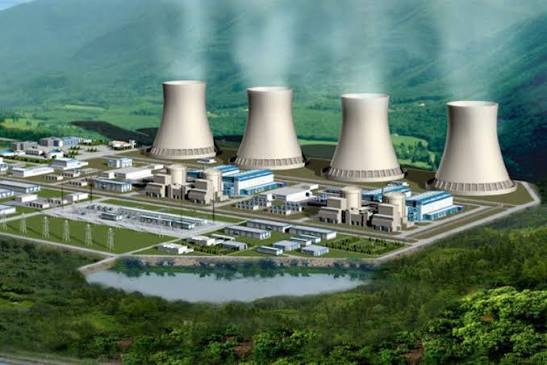
Vietnam has taken one of the most consequential legal and institutional steps since deciding to revive its nuclear power programme.
On 24 August 2026, the National Assembly formally approved the separation of the Ninh Thuan Nuclear Power Project into three legally independent projects: the compensation, support and resettlement project, the Ninh Thuan 1 Nuclear Power Plant Project, and the Ninh Thuan 2 Nuclear Power Plant Project.
The decision was adopted with an exceptionally strong parliamentary mandate: 476 of 481 participating National Assembly deputies voted in favour, representing 95.2%. The resolution took effect immediately upon adoption.
This is far more than an administrative restructuring.
For Ninh Thuan 2, it represents the creation of a clearer legal pathway from national nuclear ambition toward an independently structured, financeable and ultimately executable infrastructure project.
From One Programme to Independent Projects
The original nuclear programme was approved under National Assembly Resolution No. 41/2009/QH12. That framework pre-dated Vietnam’s current investment and public-investment legislation and did not fully establish Ninh Thuan 1 and Ninh Thuan 2 as independent projects for purposes of today’s investment-approval procedures.
That legacy structure had become a legal obstacle.
The new parliamentary resolution addresses precisely this problem by giving the individual projects independent legal status, allowing their respective investment procedures and implementation schedules to progress without being dependent upon one another.
For Ninh Thuan 2, that distinction is fundamental.
Instead of remaining one element within a combined historical programme, Ninh Thuan 2 can now move toward its own investment-policy approval, project parameters, financing architecture, implementation timetable and contractual structure.
Ninh Thuan 2 Can Now Develop on Its Own Track
The practical significance of the National Assembly’s decision is substantial.
Under Vietnam’s current framework, nuclear power plant projects generally fall within the Prime Minister’s authority for investment-policy approval. If, however, Ninh Thuan 2 requires special mechanisms or policies falling within the National Assembly’s competence, the investment-policy decision would return to the National Assembly.
Either way, there is now a defined legal route forward.
The restructuring therefore creates the foundation upon which the next generation of Ninh Thuan 2 decisions can progressively be built: project configuration, technology, financing, government arrangements, nuclear licensing, EPC and other major contracting packages, infrastructure interfaces and ultimately construction.
Importantly, separation does not mean starting again from zero. The resolution permits the relevant authorities and investors to inherit and use previously approved project data and work results in accordance with applicable law. That should preserve valuable preparatory work while allowing the new independent projects to proceed under the modern regulatory framework.
Why This Matters to International Investors and Lenders
For international capital, legal architecture matters almost as much as engineering.
Nuclear projects require extraordinarily long investment horizons, enormous capital commitments and complex interfaces among governments, project owners, technology providers, lenders, export-credit institutions, contractors, regulators and advisers.
Uncertainty regarding the legal identity or approval pathway of a project can therefore become a major obstacle to financing.
The 24 August resolution addresses an important part of that uncertainty.
By establishing Ninh Thuan 2 as an independent project, Vietnam is creating the conditions for its risk allocation, financing structure, government support mechanisms and contractual framework to be assessed specifically on the merits and requirements of Ninh Thuan 2 itself.
That distinction will become increasingly important when discussions move from policy into bankability.
Independence Does Not Mean Fragmentation
Vietnam has also recognised that two independent nuclear plants cannot operate institutionally in isolation.
The Government has therefore been tasked with establishing mechanisms for coordinated implementation, efficient use of shared technical infrastructure and clear allocation of responsibilities relating to nuclear safety and security, environmental protection, national defence and security.
An existing Government steering mechanism for nuclear power development will continue to coordinate major inter-agency issues.
This combination is important: project-level independence together with programme-level coordination.
It potentially allows each nuclear project to move at the speed required by its own investment structure while preserving central oversight of issues that necessarily cross project boundaries.
What Comes Next for Ninh Thuan 2?
The National Assembly’s decision does not itself constitute the final investment decision for Ninh Thuan 2.
Nor does it settle the technology, financing or EPC structure.
Instead, it does something arguably more fundamental at this stage: it creates the legal platform upon which those decisions can now be made.
The next milestones should therefore be watched carefully, particularly the preparation and approval of Ninh Thuan 2’s standalone investment policy and the development of its project-specific financing, technology, regulatory and contractual architecture.
For investors, lenders, export-credit agencies, technology providers, contractors and professional advisers, those developments will mark the transition from policy revival to project execution.
Conclusion – Ninh Thuan 2 Has Crossed an Institutional Threshold
Vietnam’s decision of 24 August 2026 should not be viewed simply as the division of one nuclear programme into three administrative components.
It is better understood as an institutional reset.
For the first time under Vietnam’s modern investment framework, Ninh Thuan 2 now stands on a pathway toward becoming a legally independent nuclear power project with its own approval process, financing architecture and implementation trajectory.
That matters enormously.
The engineering challenge remains formidable. The financing challenge will be substantial. Nuclear safety, regulatory capacity, workforce development, localisation, infrastructure and long-term risk allocation will require extraordinary discipline.
But mega-projects cannot become bankable until their legal foundations are sufficiently clear.
Vietnam has now laid one of those foundations.
The significance of the National Assembly’s decision is therefore not merely what happened on 24 August 2026, but what it makes possible next.
Ninh Thuan 2 is moving out of the shadow of the historic nuclear programme and toward an independent project architecture. The next phase will determine how that architecture is transformed into financing, contracts, construction and ultimately electricity for Vietnam’s rapidly expanding economy.
For international investors and lenders watching Vietnam’s energy transformation, Ninh Thuan 2 has just become considerably more important to watch.
***
Please do not hesitate to contact Dr. Oliver Massmann (the architect of market access) under [email protected] if you have any questions or require further information regarding the above. Dr. Oliver Massmann is the General Director of Duane Morris Vietnam LLC.

