


Vietnam has crossed one of the most important thresholds in the development of its capital markets.
Effective from the opening of the market on 21 September 2026, FTSE Russell reclassified Vietnam from Frontier Market to Secondary Emerging Market status.
This is not merely a change of terminology.
It changes where Vietnam sits within the architecture of international institutional investment.
Vietnamese equities are now eligible for inclusion in the FTSE Global Equity Index Series (GEIS), including major benchmarks such as the FTSE Emerging Market Index, FTSE All-World and FTSE Global All Cap indices.
FTSE Russell confirmed that Vietnam now satisfies all of its criteria for Secondary Emerging Market status following substantial reforms to market infrastructure and foreign investor accessibility, including implementation of a non-prefunding model for foreign institutional investors and a formal mechanism for dealing with failed trades. (LSEG)
For Vietnam, this is a historic achievement.
For foreign investors, however, the more important question begins now:
WHAT EXACTLY CHANGES – AND WHAT SHOULD FOREIGN INVESTORS DO NEXT?
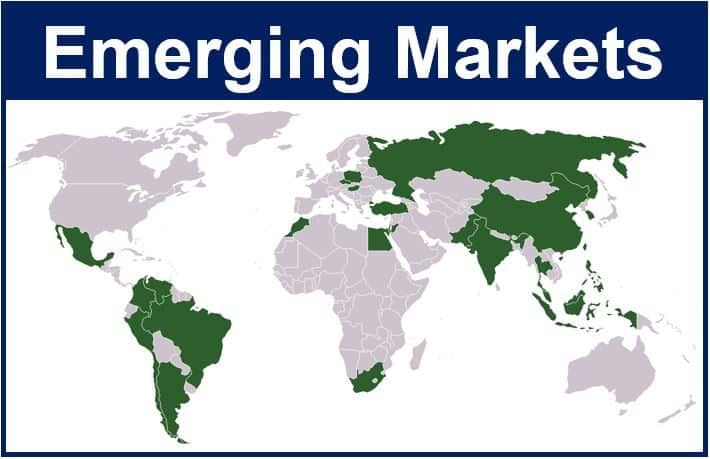
The answer is that Vietnam has moved from being predominantly a specialist frontier-market opportunity toward becoming part of the mainstream global emerging-market investment universe.
But the upgrade does not eliminate the need for careful legal, regulatory and investment analysis.
In fact, the next phase may make that analysis even more important.
- VIETNAM HAS ENTERED A MUCH LARGER GLOBAL INVESTMENT UNIVERSE
The first consequence is structural.
Frontier markets are typically followed by specialist funds with comparatively limited allocations.
Emerging markets sit within a vastly larger international investment ecosystem comprising global asset managers, pension funds, sovereign investors, insurance companies, ETFs and institutional funds benchmarked against emerging-market indices.
Vietnamese equities can now enter FTSE’s major global equity benchmarks.
FTSE has confirmed that Vietnam becomes the 24th country in the FTSE Emerging Index and the 49th country represented in the FTSE All-World Index. (LSEG)
This substantially increases Vietnam’s visibility to international portfolio managers.
For many investment committees, Vietnam can increasingly be considered not merely as:
“a specialist frontier-market allocation”
but as part of:
“Asia / ASEAN / Emerging Markets.”
That distinction matters enormously.
It changes the universe of investors that can consider Vietnam, the benchmarks against which investments are measured and potentially the amount of institutional capital available to Vietnamese companies.
- INTERNATIONAL CAPITAL SHOULD INCREASE – BUT NOT OVERNIGHT
The upgrade is expected to generate substantial additional international portfolio investment.
The World Bank estimates that the FTSE upgrade could generate approximately US$3–5 billion in additional portfolio flows in the first few years, with potential capital flows reaching considerably higher levels by 2030 if Vietnam continues its reform programme. (World Bank)
But foreign investors should understand an important point:
21 SEPTEMBER 2026 WAS THE BEGINNING OF THE PROCESS – NOT THE END.
FTSE Russell is introducing Vietnamese securities into its global indices gradually.
The implementation schedule is:
21 September 2026 – 10%
22 March 2027 – additional 20%
21 June 2027 – additional 35%
20 September 2027 – final 35%
This means Vietnam progresses from 10% to 30%, then 65%, and finally 100% implementation by September 2027. The phased approach is designed to facilitate an orderly transition, including liquidity and funding considerations associated with index replication. (Báo Chính Phủ)
This is critically important for investors.
The upgrade should therefore not be viewed as a one-day market event.
It is better understood as a:
TWELVE-MONTH INTEGRATION OF VIETNAM INTO THE GLOBAL EMERGING-MARKET INVESTMENT SYSTEM.
- FOREIGN INSTITUTIONAL INVESTORS CAN ACCESS THE MARKET MORE EFFICIENTLY
One of the most important obstacles historically facing international institutional investors in Vietnam was the prefunding requirement.
Foreign institutional investors could effectively be required to make cash available before executing securities purchases.
For major international asset managers operating across numerous markets, this created capital inefficiency and operational complexity.
Vietnam has substantially addressed this issue through its non-prefunding mechanism for foreign institutional investors, together with arrangements addressing failed trades.
FTSE Russell specifically recognised these infrastructure improvements when confirming Vietnam’s eligibility for Secondary Emerging Market classification. (LSEG)
Vietnam has also made progress in facilitating access through global brokers.
These reforms matter because an international investor does not consider only:
“Is Vietnam attractive?”
It must also consider:
“Can we actually enter, execute, settle, custody and exit investments efficiently within our global operating systems?”
Vietnam has materially improved the answer to that question.
- PASSIVE CAPITAL IS ONLY PART OF THE STORY
Much attention naturally focuses on index-tracking funds.
When eligible Vietnamese securities enter FTSE benchmarks, funds that replicate those benchmarks need to adjust their portfolios accordingly.
But the potentially larger long-term effect may come from active institutional capital.
An emerging-market fund manager who previously had no mandate—or limited incentive—to research Vietnam may now have a reason to do so.
That means Vietnamese companies increasingly compete for capital alongside companies from established emerging markets.
The consequences should extend beyond immediate fund flows.
Over time, successful integration into global emerging-market indices can contribute to:
- deeper market liquidity;
- broader institutional ownership;
- increased international analyst coverage;
- stronger price discovery;
- greater demand for investor relations;
- increased corporate-governance expectations; and
- potentially improved access to equity financing for high-quality Vietnamese issuers.
This could become particularly important as Vietnam seeks to reduce excessive dependence on bank financing and develop deeper capital markets.
The Vietnamese Government itself describes the upgrade as an opportunity to attract higher-quality, long-term international capital while continuing to improve liquidity, infrastructure, market discipline and regulatory standards. (SSC Vietnam)
- BUT THE FTSE UPGRADE DOES NOT REMOVE VIETNAM’S FOREIGN INVESTMENT RESTRICTIONS
This is perhaps the most important legal point for international investors.
FTSE CLASSIFICATION IS NOT THE SAME THING AS VIETNAMESE INVESTMENT LAW.
The upgrade does not, by itself, abolish:
- foreign ownership limitations;
- conditional market-access requirements;
- restrictions applicable to particular business sectors;
- company-specific foreign ownership limits;
- investment registration requirements;
- sector-specific licences;
- securities-law requirements; or
- other restrictions applicable to foreign investors.
A company can therefore be attractive from an investment perspective while still presenting legal limitations on the amount or manner in which a foreign investor may invest.
Foreign investors must continue to examine the specific Vietnamese company, sector and transaction.
This becomes particularly important where the target operates across several business lines, some of which may be subject to different foreign investment conditions.
The message is therefore straightforward:
EMERGING-MARKET STATUS OPENS THE DOOR. IT DOES NOT REMOVE EVERY REGULATORY GATE BEHIND IT.
- WHAT SHOULD FOREIGN INVESTORS DO NOW?
This is where the upgrade becomes actionable.
In our view, international investors considering Vietnam should now move from a “watch Vietnam” strategy to a structured Vietnam investment strategy.
We recommend seven immediate priorities.
FIRST – DETERMINE YOUR VIETNAM ALLOCATION STRATEGY
Investors should decide whether Vietnam will be treated as:
- a passive index exposure;
- part of a broader emerging-market portfolio;
- a dedicated Vietnam allocation;
- an ASEAN allocation;
- or a strategic active-investment market.
These approaches require different levels of research, infrastructure and legal preparation.
Investors should not simply wait for index weights to determine their Vietnam strategy automatically.
SECOND – IDENTIFY WHICH VIETNAMESE COMPANIES ARE ACTUALLY INVESTABLE
FTSE’s upgrade does not mean that every company listed in Vietnam automatically becomes eligible for international index investment.
Investors should analyse potential targets against:
FTSE eligibility
liquidity
available foreign ownership capacity
corporate governance
business fundamentals
Vietnamese legal restrictions.
This is particularly important because an attractive listed company may have limited remaining foreign ownership capacity or conduct activities subject to specific market-access restrictions.
The correct question is therefore not merely:
“Which Vietnamese stocks will benefit from the upgrade?”
It is:
“Which high-quality Vietnamese companies are both commercially attractive and genuinely accessible to international capital?”
THIRD – REVIEW FOREIGN OWNERSHIP HEADROOM BEFORE BUILDING A POSITION
Foreign ownership capacity can become increasingly important as international demand rises.
Institutional investors contemplating significant positions should determine early:
- the applicable statutory foreign ownership limitation;
- the company’s own foreign ownership limit;
- current foreign ownership utilisation;
- sector-specific restrictions;
- whether different business activities create additional limitations; and
- whether the desired position can realistically be accumulated.
Waiting until investment approval has been obtained internally before investigating these issues can waste valuable time.
FOURTH – PUT THE MARKET-ACCESS INFRASTRUCTURE IN PLACE
Foreign institutional investors should ensure that their Vietnam execution architecture is operational.
This includes, as applicable:
- securities accounts;
- custody arrangements;
- trading arrangements;
- global/local broker connectivity;
- foreign investor identification/registration requirements;
- settlement procedures;
- non-prefunding arrangements;
- foreign-exchange execution;
- tax documentation; and
- internal compliance procedures.
The regulatory reforms have made participation easier.
Investors still need the operational infrastructure to take advantage of them.
FIFTH – USE THE 2026–2027 FTSE PHASING AS A STRATEGIC TIMELINE
The four-stage implementation provides investors with something valuable:
visibility.
Rather than regarding September 2026 as a completed event, investors should monitor each stage through September 2027.
Particular attention should be paid to:
- foreign institutional flows;
- liquidity changes;
- index additions and deletions;
- foreign ownership utilisation;
- pricing effects;
- settlement performance;
- regulatory developments; and
- further market-access reforms.
The phased implementation gives active investors an opportunity to evaluate how Vietnam’s market evolves as international participation increases.
SIXTH – LOOK BEYOND THE STOCK MARKET
The implications of emerging-market status extend beyond buying listed Vietnamese shares.
A deeper and more internationally integrated capital market can affect:
M&A
private equity
IPOs
strategic investments
capital raising
corporate governance
Vietnamese companies seeking international investors
and ultimately Vietnam’s broader cost and availability of capital.
International strategic investors should therefore consider the upgrade within their wider Vietnam strategy rather than viewing it purely as a portfolio-investment event.
For Vietnamese businesses, international institutional visibility may also increase pressure to improve disclosure, governance, sustainability practices and investor communications.
SEVENTH – PREPARE FOR VIETNAM’S NEXT REFORM PHASE
Vietnam itself does not regard FTSE Secondary Emerging Market status as the finish line.
The Ministry of Finance and State Securities Commission have made clear that reforms will continue, including improvements in market liquidity, infrastructure, risk management, products, transparency and sustainable attraction of international capital. (SSC Vietnam)
There is another major objective on the horizon:
MSCI EMERGING MARKET STATUS.
The World Bank has specifically identified Vietnam’s ambition to achieve inclusion in MSCI’s Emerging Markets Index, which could further broaden international capital access. (World Bank)
Foreign investors should therefore expect the Vietnamese capital-market regulatory environment to continue evolving.
- WHAT SHOULD LARGE STRATEGIC INVESTORS DO DIFFERENTLY?
For multinational corporations, sovereign investors, private-equity houses and large institutional investors, the FTSE upgrade should trigger a broader reassessment.
Vietnam should increasingly be evaluated simultaneously through three lenses:
CAPITAL MARKET
What listed investment opportunities are now becoming more accessible?
CORPORATE / M&A
Which Vietnamese companies may become attractive strategic or acquisition targets as capital markets deepen?
DIRECT INVESTMENT
Where can foreign investors combine portfolio exposure with manufacturing, infrastructure, technology, energy, financial services or other long-term investment?
Vietnam’s fundamental attraction remains much broader than its stock exchange.
The significance of the FTSE upgrade is that the country’s financial architecture is beginning to catch up with its economic importance.
- THE OPPORTUNITY COMES WITH HIGHER EXPECTATIONS
Emerging-market status is not simply a reward.
It also raises expectations.
International investors will increasingly expect:
- stronger corporate governance;
- reliable financial disclosure;
- effective minority-shareholder protection;
- transparent related-party transactions;
- predictable regulation;
- efficient settlement;
- improved English-language disclosure;
- stronger enforcement; and
- greater alignment with international market practices.
Vietnamese regulators and listed companies therefore face a new challenge:
attracting international capital is one achievement; retaining it through confidence, transparency and performance is another.
The Government has expressly recognised that the upgrade increases expectations concerning market quality and regulatory capacity. (SSC Vietnam)
- THE WAY FORWARD FOR FOREIGN INVESTORS
The practical message for foreign investors can therefore be summarised clearly.
DO NOT TREAT THE FTSE UPGRADE AS THE END OF A STORY.
TREAT IT AS THE BEGINNING OF A NEW INVESTMENT CYCLE.
From now through September 2027, international investors should:
BUILD THEIR VIETNAM STRATEGY.
IDENTIFY INVESTABLE COMPANIES BEFORE COMPETITION FOR FOREIGN OWNERSHIP CAPACITY INCREASES.
UNDERSTAND THE LEGAL LIMITS BEFORE COMMITTING CAPITAL.
ESTABLISH CUSTODY, BROKERAGE, SETTLEMENT AND FOREIGN-EXCHANGE INFRASTRUCTURE.
FOLLOW EACH FTSE INCLUSION TRANCHE RATHER THAN FOCUSING ONLY ON 21 SEPTEMBER 2026.
MONITOR THE NEXT GENERATION OF MARKET-ACCESS REFORMS.
LOOK BEYOND PASSIVE INDEX FLOWS TO ACTIVE EQUITY, M&A AND STRATEGIC INVESTMENT OPPORTUNITIES.
And above all:
DISTINGUISH BETWEEN MARKET ACCESSIBILITY AND LEGAL INVESTABILITY.
Vietnam is substantially more accessible to global institutional capital than it was only a few years ago.
But sophisticated investors will still need to determine, investment by investment, what they can own, how they can own it, what approvals apply and how the investment should be structured.
- VIETNAM HAS CROSSED THE LINE
For many years, international investors regarded Vietnam as one of Asia’s most promising frontier markets.
That description is now outdated.
Vietnam is a FTSE Russell Secondary Emerging Market.
Its securities market is entering the global emerging-market benchmark system.
Its accessibility to international institutional investors has materially improved.
Its integration will continue in stages until September 2027.
And the World Bank estimates that the upgrade could generate billions of dollars of additional portfolio investment as the market develops. (World Bank)
But perhaps the most important change is psychological and strategic.
Vietnam is no longer asking international investors simply to believe that it can become an emerging market.
VIETNAM IS NOW AN EMERGING MARKET.
The question for foreign investors has therefore changed.
It is no longer:
“SHOULD WE START WATCHING VIETNAM?”
It is:
“WHAT IS OUR VIETNAM INVESTMENT STRATEGY NOW?”
For international investors willing to combine commercial opportunity with disciplined legal, regulatory and market analysis, that may be the most important consequence of the upgrade.
***
Please do not hesitate to contact Dr. Oliver Massmann under [email protected] if you have any questions or want to know more details on the above. Dr. Oliver Massmann is the General Director of Duane Morris Vietnam LLC.

